The Unbearable Weight of Massive Talent is a massively entertaining film featuring a fantastic performance by Nicolas Cage.
CREDIT: Lionsgate
7/10
For the past decade, legendary actor Nicolas Cage has been involved in some of his most captivating pieces of work. In 2018, Nicolas Cage gave us what I believe to be his best performance yet in Mandy. Three years later he gives us another one of his best performances that should have been nominated for an Academy Award in Pig. Overall, Nicolas Cage has been stacking up his best work and has been finding his way back into the zeitgeist. Seeing as the film also includes both Tiffany Haddish and Pedro Pascal, I was excited to watch the film. Now, how did the Nick Cage film where Nicolas Cage plays himself hold up?
In The Unbearable Weight of Massive Talent, Nick Cage himself is caught at a crossroads as he tries to find the next best role for himself or retire. After failing to get a role he so desperately wanted he agrees to do a birthday gig his agent played Neil Patrick Harris lined up for him. Things are not easy at home either, as his relationship with his ex-wife Olivia (Sharon Horgan) is deteriorating along with his relationship with his daughter Addy (Lily Sheen). Nicolas Cage is being pressured by the ghost of himself to remain the movie star he is and forget about branching outside of what he is used to. Cage travels to an island to do this birthday gig for a billionaire Nick Cage superfan, Javi Gutierrez (Pedro Pascal), but soon Cage realizes things are not as they seem. Soon after, Cage finds himself helping CIA agents played by Tiffany Haddish and Ike Barinholtz to capture Guttierrez who is believed to have kidnapped a politician’s daughter named Maria (Katrin Vankova).
The Unbearable Weight of Massive Talent excels in being everything it needs to be, a fun action-comedy. Tom Gormican directs an entertaining film from a script written by him and Kevin Etten. The film is not your masterclass of filmmaking but makes it up with some stellar chemistry between the cast especially the dynamic between Pedro Pascal and Nicolas Cage. The film is wholeheartedly a massively entertaining time at the movies, no pun intended. You feel that Nicolas Cage gives his all hopefully proving everyone wrong that even in movies where he plays himself he is still giving one hundred percent. Some characters don’t feel as fleshed out and overall the rushed third act is a bit convoluted. I still find myself intrigued and pulled right back into the film. If anything this picture is here to remind us that Nicolas Cage is back even though he never left.
Watch The Unbearable Weight of Massive Talent in theaters.
Robert Eggers’ third feature is an imbalanced Viking revenge film that cannot stand on its own two feet.
CREDIT: Focus Features
7/10
To say we have been expecting the third feature from one of the most interesting filmmakers working right now is an understatement. Robert Eggers has been crafting quite the filmography with his last two feature films, The Witch and The Lighthouse. There has not been a filmmaker like Eggers that has burst into the world of filmmaking in quite a while. When the trailer for The Northman was released, the film immediately shot up to my second most anticipated film of this year. You could say that I was looking forward to this film, and being able to watch this on the big screen was a necessity for me. Well, let’s journey into the brutal landscape of Robert Eggers’ The Northman.
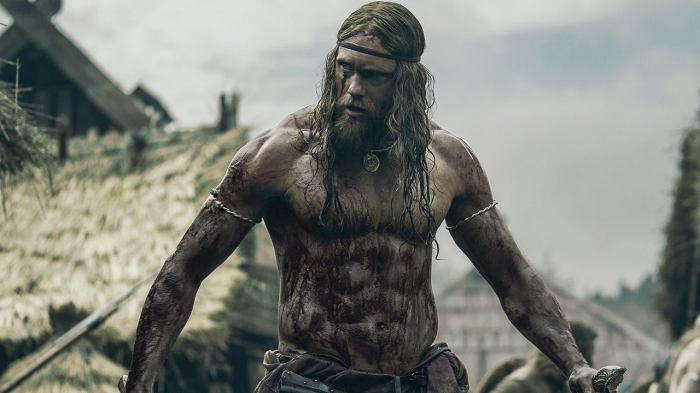
The Northman is directed by visionary artist, Robert Eggers. The film’s script is written by Eggers and Sjón (Lamb). The film stars Alexander Skarsgård, Nicole Kidman, Claes Bang, Ethan Hawke, Anya Taylor-Joy, Gustav Lindh, Elliott Rose, Willem Dafoe, and Björk. The film’s visual language is crafted by frequent collaborator, Jarin Blaschke. The Northman’s musical score is composed by Robin Carolan and Sebastian Gainsborough.
In The Northman, we follow the revenge-filled journey of Prince Amelth (Alexander Skarsgård). Son of King Aurvandil War-Raven (Ethan Hawke) and Queen Gudrún (Nicole Kidman), the family rule over their kingdom on the Island of Hrafnsey. One day, after returning from battle, King Aurvandil War-Raven realizes that he must prepare his son to eventually take the throne as he feels his days are numbered. The two participate in a ritual fueled by hallucinogenics and rage overseen by the king’s jester, Heimir (Willem Dafoe). In the morning, Fjölnir (Claes Bang), led by his small army of soldiers kills the king, and Amleth is forced to retreat. Amleth escapes his father’s kingdom leaving behind his mother and becomes a berserker raiding Slavic villages. He finds love with a sorceress named Olga (Anya Taylor-Joy) while planning his return to reclaim his kingdom, avenge his father, save his mother, and kill his murderer uncle.
The Northman is a conflicting cinematic achievement in the filmography of Robert Eggars. The film is equal parts captivating and convoluted, to say the least. As always, I want to first concentrate on the positives of this film because it has a lot of them and they rightfully should be highlighted when discussing the picture. Jarin Blaschke’s cinematography is a spectacle for the ages. The framing, lighting, and movements fluidly work together to create a visually appealing aesthetic for this film. Carolan and Gainsborough’s work on the musical score is magnificent and encapsulates the aura that is carried through this film. Both of these aspects work so well to create the immersive atmosphere within The Northman. I even found myself really enthralled by Alexander Skarsgård, Nicole Kidman, Claes Bang, and Anya Taylor-Joy’s performances. However, where the picture excels there is also parts where the film falls ultimately flat. The first half of the film plays off way too fast that it does not allow moments to breathe. Once we reach the climax and start the second half, the film begins to drag its weight to wrap up. Characters like Willem Dafoe’s Heimir and Björk’s Seerees get left by the wayside and never come back up again. The script and editing are ultimately the driving factors holding this film from being great. Where Eggers’ last two films captivate the audience through their rich storytelling The Northman sadly cannot find the use of its potential in its epic story.
Enter The Void is the psychedelic melodrama that creates a once-in-a-lifetime cinematic experience.
CREDIT: Les Cinémas de la Zone
I don’t indulge in any mind-altering substances other than maybe to an extent my antidepressants, but those are prescribed and I take them only once a day. Throughout my life, I have always wondered what it would feel like to watch films in an altered mental state. It is for own my well-being that I don’t indulge in any of these substances though. Now, there are two films that, in my opinion, make me feel as if I am in another plane of existence. The first one happens to be Stanley Kubrick’s 2001: A Space Odyssey specifically when we enter into the bending of space and time. The other film is Gaspar Noé’s third feature and passion project, Enter the Void. Both films I believe are one-of-a-kind cinematic experiences that utilize many of our five senses to feel this transformation. While exploring the rest of Gaspar’s films back in 2018, this was the last film of his I watched. I specifically remember finding the DVD copy at my alma mater’s library. I would usually go to the library every other weekend and check out five films (mostly those in The Criterion Collection). At this point, I already had a clear understanding of Gaspar Noé’s style, so I checked out Enter the Void, and since then I would never look at filmmaking the same ever again.
Enter the Void is directed by Gaspar Noé and written by him with the help of his wife, Lucile Hadzilhalilovic. The film is believed to loosely adapt the Tibetan Book of the Dead. The film stars Nathaniel Brown, Paz de la Huerta, Cyril Roy, and Ed Spear. Enter the Void is mostly presented from the first-person point of view perspective. The film’s photography is crafted by the director of photography, Benîot Debie. Thomas Bangalter composes the score for this film again after composing Noé’s Irreversible.
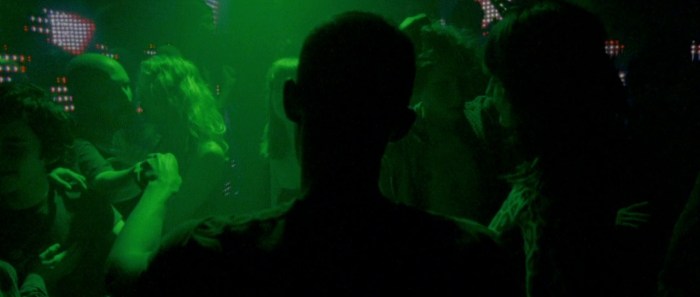
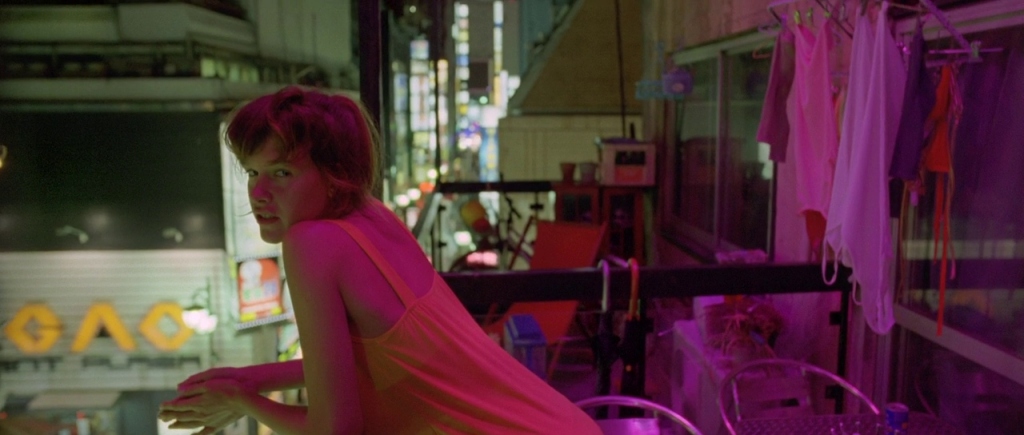
The film follows Oscar (Nathaniel Brown) who is murdered by the police after his friend Victor sets him up at a club in a neon-lit Tokyo called, The Void. After Oscar dies he has an out-of-body experience that allows him to travel through Tokyo and experience the effects of his death on his loved ones’ lives. He watches as his sister Linda (Paz de la Huerta) copes with her loss, his friend Alex (Cyril Roy) leaves his life of drug use/dealing, and Victor (Olly Alexander) burns his bridges. Gaspar Noé has gone as far as to describe this film as a psychedelic melodrama that is concentrated on the experience of the film.
Enter the Void is a hallucinatory experience that explores themes of motherhood, love, existence, and death. It is coated in a mesmerizing visual language filled with neon lights and an interesting approach to camera movements. The performance even though not a big aspect still finds its way to feel raw through the vibrations of Paz de la Huerta’s acting. I love this film because as mentioned it changed the way I looked at filmmaking. Around this time, I was barely starting to understand the world of experimental film. I approached my style of filmmaking with many films in mind and one of them was Enter the Void. Of course, the longer 161 minutes version is better but both versions contain the very experience that Noé intends to display. The first-person point of view and floating camera are never distracting. Once again, we are treated to a film that only Gaspar Noé could make.
Before I continue, I would love to once again bring up a wonderful film essay made by Spikima Movies. Spikima Movies concentrates on the visual presentation of trauma in Enter the Void within their video essay. The trauma expressed is such an important thematic element of the film. The trauma acts as the backbone of our story at hand within Enter the Void. Linda and Oscar haven’t had the easiest life. On top of losing their parents, both have to be separated from each other for most of their teenage and young adult lives. One had to be thrown into the legal foster care system which in itself is not the easiest thing to experience. The siblings’ loss is felt through the film and expressed in various ways. Linda expresses her grief with her constant need for Oscar to be her protector. She needs someone who will not take care of her physically because she is fully capable of that, but she does need someone who will be there to hear her out. She loves her brother because they have an unbreakable bond that has been able to live through their traumatic loss. Oscar is not that different from his sister, even though drugs are most of the time an escape from this reality. I find the symbol of the nipple in this film to be interesting. When a baby is born they cut the umbilical cord which is the literal connection to the mother. The baby is no longer directly connected to its mother and therefore must find another way to stay connected. Well, look no further than breastfeeding and its visual representation of connectivity. A baby consumes milk directly from their mother and for as long as the baby may need it they are physically connected to their mother. There is a scene where you see a younger version of Oscar walking in on his mother as she breastfeeds Linda. Alex even mentions that doing LSD is a lot like sucking on his mother’s nipple. Even when Oscar is having sex with Victor’s mother he proceeds to first suck the nipples. Yes, Gaspar Noé states that the ending is Oscar reliving his birth as a false dream showcasing his most traumatic moment. The camera dips into his mother’s nipple to once again feed and experience the pain of existing without a mother.
Of course, death is another highly important aspect of the film. Noé describes that the film is mostly viewing life after death while on drugs. Death is used as a motif but as the inciting incident, it allows for events to unravel. Linda seems to finally understand that she should be with Alex instead of Mario. Even though death can be a distressing and heartbreaking thing in the world of Enter the Void it leads to some good things. Alex has cleaned himself up and will be able to be there for Linda. One would hope that this leads to a healthy relationship between the two. On the other hand, death leads Victor into an unhealthy path of burning his bridges with his parents and Linda. After being told by Linda that he should kill himself, we never know what happens to Victor since that last confrontation. If death is what finally sets Oscar free of all his problems then the ending is a reminder that reincarnation is more of a punishment for our protagonist. That is where the true experience of Enter the Void is felt.
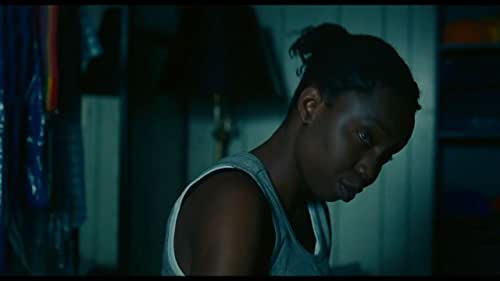
Brad and Raul continue on with their April theme of films directed by women by discussing Dee Rees’ Pariah.
IMDb Synopsis: “A Brooklyn teenager juggles conflicting identities and risks friendship, heartbreak, and family in a desperate search for sexual expression.”
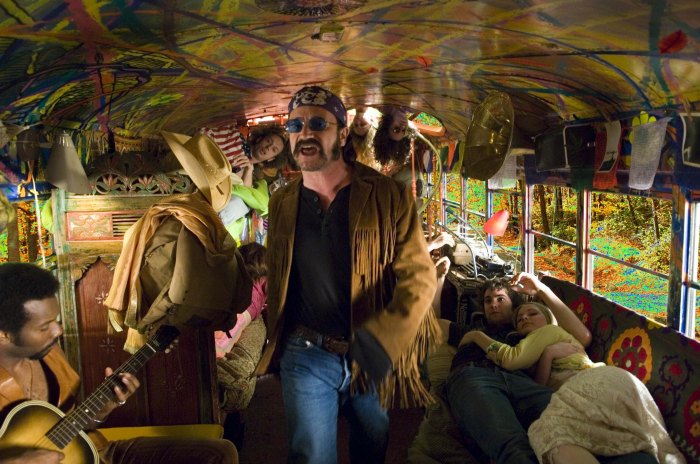
Raul and Brad continue on with their month looking at films directed by women as they look at the jukebox musical film, Across The Universe.
IMDb Synopsis: “The music of The Beatles and the Vietnam War form the backdrop for the romance between an upper-class American girl and a poor Liverpudlian artist.”




 The Nerd Corps