HCAF23: ‘Family Portrait’ Review

Lucy Kerr’s Family Portrait is a meditative and imaginative look at the cracks within the foundation of a family gathering to take a family picture.

Courtesy of Conjuring Productions

9/10

I’ve had a lot of films that have resonated deeply with me this year. Films like Killers of the Flower Moon shook me to my core, Oppenheimer’s grand display of the troubles inside our protagonist’s head surprised me, but none of them as much as the feeling I got from Lucy Kerr’s Family Portrait. I walked out of this film with a sense of familiarity with the story of the picture. I could not shake off the feeling that I was shown something too intimate that I did not have the right to view. It almost felt like spying on the home of a family as it starts to crumble apart and you don’t have any choice but to keep looking. Movies like this are hard to come by and when they do it’s a delight to be able to witness their magic before it reaches the whole world. This was one of the last films I watched at the festival, and after having a conversation with the director I knew that this would be one of my favorite films of the year.

Family Portrait is directed by Lucy Kerr and written by Kerr and Karlis Bergs. The film stars Deragh Campbell (Possessor) who plays Katy whose boyfriend Olek played by Chris Galust (Give Me Liberty) is supposed to take a family picture at their lake house. That’s a pretty simple premise, right? Well, as the family is trying to get this picture situated the family’s matriarch goes missing. While everyone seems to be off in their own world, Katy sets off on a surrealistic journey to find her mother. The film was shot by Lidia Nikonova and edited by Karlis Bergs. I also have to shout out the sound team composed of Nikolay Antonov and Andrew Siedenburgh.

I could talk for ages about the beautiful cinematography of Family Portrait, its invasive sound design that shakes you to the depths of your skin, and the pensive body language from our lead Deragh Campbell. Yet, none of that comes close to the feeling of watching this movie progress and fly by its almost 80-minute runtime. The film’s meditative pace reminded me of the patience found within Andrei Tarkovsky’s Stalker (a film that changed my life after watching it and the director echoed this same statement) but with the technical language of Ingmar Bergman. Lucy Kerr took a lot of inspiration from Argentinian director Lucrecia Martel’s La Cienaga along with Hungarian director Bella Tarr’s Sátántangó. Kerr loves her long takes and continuously shifts the viewer’s focus as opposed to the camera’s focus on the multiple members of the family. Some aren’t as concerned as Katy and that begins to stress her out. I sat there just dumbfounded that no one cared enough to search for their mother/aunt/wife with Katy. Yet, is that not the point of this film?


I wonder if Lucy Kerr’s answer to her thematic question is that we must venture outside of what we know to fix what’s broken inside? Are we only spectators to the dysfunctional nature of our family especially as the pandemic raged on and a lot of us were forced to stay home pondering these very questions. This is one of those occasions where I think it’s fine that the film doesn’t answer everything. Lucy Kerr wants the audience to continue to feel her narrative and the conversation surrounding this surrealist dreamscape. Make it a mission to watch Family Portrait whenever it’s playing at a cinema near you.

HCAF23: ‘Going Varsity in Mariachi’ Review

Alejandra Vasquez and Sam Osborn’s Going Varsity in Mariachi is a masterful look into the world of UIL Mariachi competitions.

Courtesy of Osmosis Films

9/10

As I’ve stated before, I was born and raised in Brownsville, Texas on the border by the sea located in The Valley. No, I do not mean those in California but the Rio Grande Valley in deep South Texas where the humidity is a method of torture, you can find the best Mexican food that’s not in Mexico, and where ranchero music is a staple of our culture. When I heard about Going Varsity in Mariachi I was very aware of its subject matter. My high school did not have this program since it was a charter school but all the schools in BISD had their own estudiantina program. When I was in elementary school some of those schools actually came to perform for us. It’s a big part of the culture back home so to see it highlighted in this documentary easily shot it up on my list of most anticipated titles at the 15th annual Houston Cinema Arts Festival.

Going Varsity in Mariachi is directed by the duo behind Folk Frontera, Sam Osborn and Alejandra Vasquez. I had the pleasure of watching their short film Folk Frontera at last year’s Houston Cinema Arts Festival as part of the Borders No Borders short film program. The film is shot by Michael Crommet and edited by Daniela I. Quiroz. The film follows the students in the “Mariachi Oro” (Mariachi Gold) from Edinburg North High School. Some of the students are there because of their passion for the music and some are there for the hell of it. By the end of the film you’ve followed their journey to the top of these competitions and as these students grow a deep appreciation for musica ranchera.

It’s almost impossible for me to gather enough words to describe what I love so much about Going Varsity in Mariachi. Its visual language sets it apart from other documentaries I’ve seen. The frames are always well-composed and colored to bring out the bright colors of the Rio Grande Valley. There are many heartfelt moments within the film from students failing to follow rules, watching students as they get ready for their proms, and of course, the grand moment of watching Mariachi Oro reach second place. The journey is rough for these students but throughout the documentary, they never lose sight of what they want. It’s all powered by their coach, Abel Acuña. Mr. Acuña’s guidance sometimes feels like tough love but it’s always for the best of his students. He reiterates time and time again that there isn’t a “plan b” for them as they’re not a well-funded program. These students need to make the best out of what they have and the film shows that they do.

Going Varsity in Mariachi will go down as one of the best films of the year and as of right now my favorite documentary of the year. I felt all of its warmth as it reminded me of home. At times, I also felt the devastation these students felt knowing they failed. It all makes up for a marvelous third act where it all culminates for them. Make sure to watch Going Varsity in Mariachi when it is released in a cinema near you.

Slamdance 2023 Short Films Reviews

One of the best parts of film festivals is the short films selected! These are five reviews of several short films I was able to catch at this year’s Slamdance Film Festival.

Mela, directed by Kristian Mercado

7/10

Mela is the first film I watched at this year’s edition of the Slamdance Film Festival. I was honored to interview the film’s director Kristian Mercado for The Nerd Corps’ YouTube channel. Mela is an enticing short film from Mercado that gauges your attention as it works around its gripping story. In Mela, we follow a single mother who has aspirations to become a famous reggaeton dancer but must navigate her responsibilities of being a mother in the process. The film includes the insanely talented Mela Murder (The Florida Project). I fell in love with the thematic discussion of the difficulties of raising a human being and chasing your dreams. Kristian Mercado’s visual language within Mela is also easy to drool over as the neon paradise provides an enigmatic dreamscape. The film moves a bit too fast at times and I wish we had the time to slow down. I feel as if slowing down would help consume the situation at hand better. Yet, even with these minor flaws the short film still manages to captivate the audience. You will be able to find something to love from the music, cinematography, performances or the overall story of Mela.

Safe as Houses, directed by Mia Mullarkey

6/10

Mia Mullarkey’s Safe as Houses is a solid film filled with heart and heartbreak. The film is centered around a woman with down syndrome who befriends a little girl who has been having trouble as of late at home. As a troubled home starts to get revealed the friendship grows between Aggie and Lucy. Sadly, the neighborhood isn’t as open and accepting as Aggie, so things go south and the true colors of Aggie’s neighbors are shown. I found myself enjoying Safe as Houses but I could not get behind the pacing of the film. As much as the story is exciting and sticks, the flow of the story holds it back from being great. Mullarkey also chooses a great location to film as it really creates the atmosphere of a small tight-knit community. It’s essential to have that feeling especially when we reach our conclusion as it is juxtaposed with the lack of respect for their fellow neighbor, Aggie. You don’t see a lot of films with disabled actors in the mainstream. That is why Safe as Houses, even if it has its flaws is far more critical than what is holding it back. I loved the underlying themes of not being judgmental and providing a safe environment for everyone.  I definitely cannot wait to see what else Mia Mullarkey has to offer.

Lollygag, directed by Tij D’oyen

7/10

If you know me you know that the erotic is something that interests me a lot. Now, Tij D’oyen’s short film Lollygag is not a complete work of the erotic. The story does revolve around a voyeur who stares out the window at her next-door neighbor during a summer in her childhood. For a ten-minute short film, Lollygag wastes no time captivating its audience with various aspects. The pastel cinematography by Matthew Roveto was the first thing that grabbed my attention. You don’t move past this one location of a backyard but that’s not a limitation for Tij D’oyen’s storytelling as it provides an enticing backdrop for the movie’s events to unfold. The soft yet disturbing narration by Alex Sarrigeorgiou manages to keep you afloat while also getting under your skin. A mix of tight shots and natural lighting creates an atmosphere that is difficult to look away from. Tij D’oyen uses all of this to explore queer identity and voyeurism. The pace is really slow, especially for a ten-minute film, but that’s only a minor gripe about such a delightful watch. I never found myself looking away or losing interest in the narrative. I would love to see what else this promising director has to offer.

Mahogany Drive, directed by Jerah Milligan

7/10

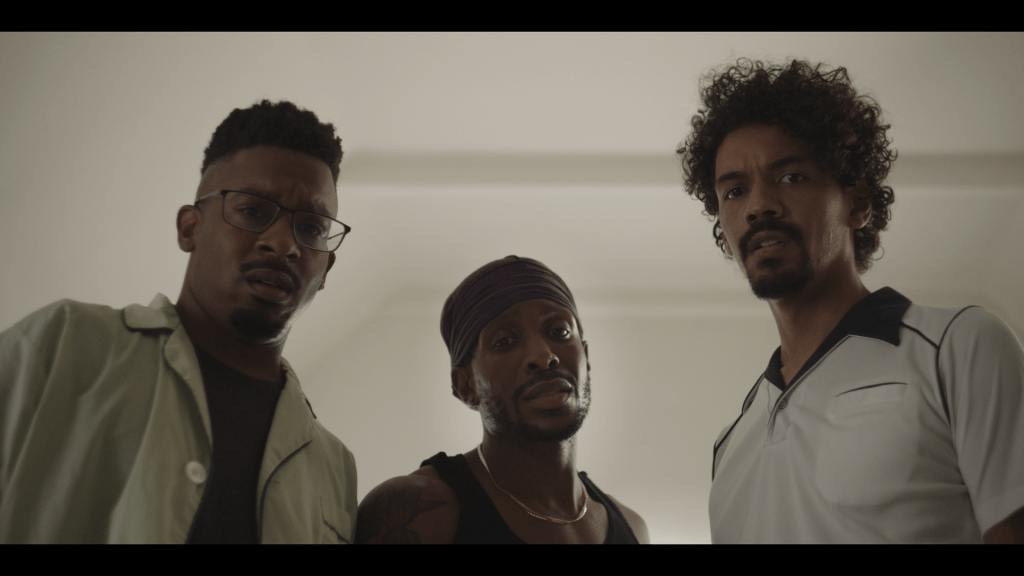
Jerah Milligan’s Mahogany Drive is an expertly written short with topical discussions on race and the patriarchy. Milligan manages to include some genuinely humorous bits that remind me a lot of last year’s Sundance hit, Emergency. Jonathan Braylock, James III, and Jerah Milligan have some marvelous chemistry together as they try to uncover why the house they are staying in is killing white women. The tension is high in the film and Milligan manages to direct this swiftly and with ease. The film’s practical effects elevate the horror approach and never feel distracting from the overt comedic approach to the film. I genuinely enjoyed the film and felt that it was a unique approach to discussing the difficult conversations surrounding race relations. While it’s not the most stylized film since its cinematography is a very naturalistic approach it still has its attention-grabbing moments. Mahogany Drive makes the most of its thirteen-minute runtime as it never feels like it drags on or is rushing to its end. By the end of the film, I was laughing and enjoying my time with our characters. If you get the chance to watch this eventually I can promise that Jerah Milligan’s Mahogany Drive will not disappoint. Who knows maybe this can be made into a feature-length film. I know that I would love to see this idea be expanded upon!

The Sidewalk Artist, directed by Brandon Rivera and David Velez

7.5/10

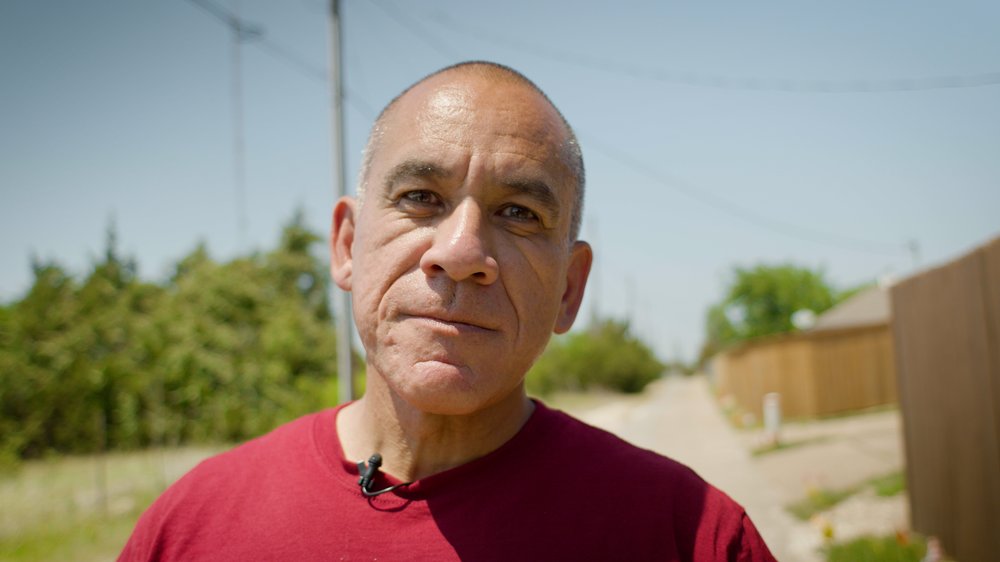
Art will always be subjective and as much as it continues to be gatekeeper by those at the top of the art world, you’d be surprised at the amount of art found in your everyday life. The Sidewalk Artist is a testament to that statement. We’ve all seen cement before, and for those who have it in their properties, you know that it is pretty much well known to dip your hands in and leave your prints in it. David Velez and Brandon Rivera’s mockumentary slice of life is a tender exploration of genuine happiness. Manuel Portillo finds a way into the heart of the audience through the such beautifully patient direction. It’s always assumed that children are the ones who create such designs on sidewalks. Yet, Velez and Rivera remind us that art like this is therapeutic and is used to remember key moments in life. I appreciated the approach and fell in love with the film until it wrapped up. I hope these two continue to find success in their careers as storytellers. Congratulations to them are in order as The Sidewalk Artist won the Grand Jury Prize at Slamdance for the film.

HCAF22: ‘Women Talking’ Review

Women Talking carries an important and topical discussion but is held back by its lackluster pace and uneven structure.

Courtesy of United Arts Releasing

5/10

The final piece of my coverage on the 22nd Houston Cinema Arts Festival is about a film that has been highly spoken about for a while now around the awards circuit. Women Talking had its premiere at the 2022 Telluride Film Festival and also had other film festivals screenings like Toronto International Film Festival and New York Film Festival. It managed to garner a good amount of hype and because I did not have the chance to travel to New York for NYFF this year, I was excited to watch this film at HCAF this year. We also had part of the supporting cast in attendance for a post-screening Q&A moderated by one of the programmers of the Museum of Fine Arts at Houston. Yet, even with all the excitement built around this film, Sarah Polley’s Women Talking did nothing to move the needle for me.

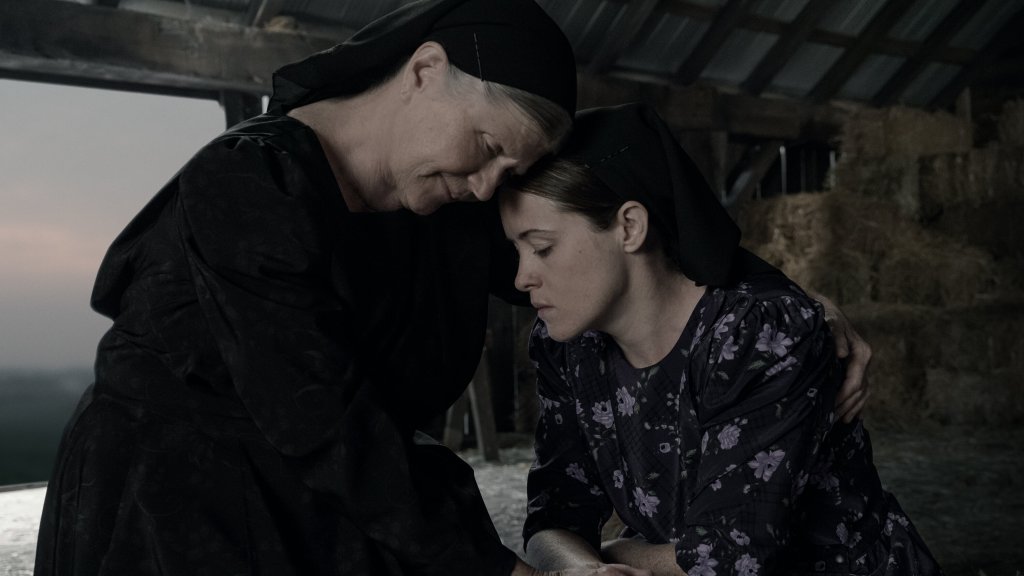
Women Talking is based on the novel by Miriam Toews that is inspired by a real-life story of Mennonite women in Bolivia. The film’s script is written by Sarah Polley who also directs the film. Its cast includes names such as Rooney Mara, Claire Foy, Jessie Buckley, Judith Ivey, Ben Whishaw, and Frances McDormand (who also serves as a producer). The movie’s cinematography is provided by Luc Montpellier and its score is composed by none other than Hildur Guðnadóttir. Women Talking has been named one of the best films of 2022 by both the American Film Institute and the National Board of Review. Along with those accolades it has also been nominated for Golden Globes Awards, Critics Choice Awards, and Screen Actors Guild Awards,, and several people are awaiting news of possible Academy Awards nominations.

In Women Talking we follow a group of women living in a Mennonite community who have been physically and sexually assaulted, and are tasked with making the decision to stay or leave the colony forever. The film tackles a struggle of faith and examines the violent power struggle of structural misogyny. Women of all ages meet together to discuss democratically their reasons to stay or leave. As the final day approaches to make their decision, the women find themselves struggling to make a decision that benefits them. A fight against violence and their lack of freedom create an interesting concept that is lost on a lackluster execution.

Even though Women Talking has an interesting concept and great performances from Jessie Buckley, Claire Foy, and Rooney Mara it’s held back by an uneven pace. I found myself to be really drawn to the first act but it never recovers from a pace that drags its feet until the credits roll. I loved Hildur Guðnadóttir but I felt that it did not match the visual language provided by the film’s color palette and cinematography. The script is fine and there are some really clever uses of dialogue that stand out but the biggest problem lies in its editing. The second act becomes too redundant and I feel with shaving off about around 10 to 15 minutes you’d have a better-structured narrative. While I did not like Women Talking you cannot deny its importance in the conversations had within the film. That’s why this will continue to live in the public whether or not it’s the best-made film or not.

Watch Women Talking in theaters as it continues its wide theatrical release.

HCAF22: ‘All The Beauty and The Bloodshed’ Review

All the Beauty and the Bloodshed is a carefully crafted documentary that highlights the life and activism of an incredible artist and human.

Courtesy of NEON

8/10

One of my favorite aspects of the Houston Cinema Arts Festival is the documentaries that they include in their program. Last year Luchadoras was one of my favorite films of that year, and even though it hasn’t been released yet, the film was one of the best documentaries I’ve ever seen. This year they screened the 2022 Venice International Film Festival’s Golden Lion winner, Lauren Poitras’ All the Beauty and the Bloodshed. As always most of the films are screened at the Museum of Fine Arts in Houston. It is safe to say that not only is All the Beauty and the Bloodshed one of the best documentaries but films in general of last year.

Laura Poitras examines the life and activism of photographer/artist, Nan Goldin. Nan Goldin embarks on a fight against the Sackler family who are at the forefront of the opioid epidemic. The film aims to balance out by discussing Goldin’s life and her fight against the rising death toll of opioids. Poitras includes several of Goldin’s photographic works and archival footage of her life. The documentary tries to show off in several chapters how each part of her life has led to her biggest battle yet against the Sackler Family. Nan Goldin is trying her best to make sure that no museum or art exhibits continue to take money from them. She organizes protests like throwing massive amounts of prescription pill bottles into fountains inside the museums. Poitras also includes archival and present interviews with those who have suffered from the Opioid Epidemic. One of the most chilling scenes is one of Goldin and her protestors having a Zoom meeting with the Sackler family and unloading their experiences and frustrations against them.

For better or for worse, All the Beauty and the Bloodshed lays all of its cards on the table and even if it may not always work to its advantage, the film finds a way to stick with the audience until the credits roll. The film starts really strong as it puts you right into the belly of the beast with the first of many protests orchestrated by Nan Goldin’s Prescription Addiction Intervention Now advocacy group (P.A.I.N.). I enjoyed that we link her life and experiences coherently enough with her activist past and present. Yet, the biggest problem I have with the film is that it began to lose me in the second act. The photographs even though having their important purpose really do find a way of distracting the viewer and ultimately slowing down the pace. By the time we get to that eruptive third act you’re locked right back in, but it feels more like a relief that the film ended more than the catharsis one hopes for during the film. That could also be expected as the fight against the Opioid Epidemic continues even with these major victories. Nevertheless, All the Beauty and the Bloodshed is impressive but its structure keeps from becoming greater than it is.

Watch All the Beauty and the Bloodshed in theaters nationwide as it continues its theatrical release.