HCAF23: ‘Mami Wata’ Review

C.J. ‘Fiery’ Obasi’s Mami Wata is a gorgeously stylized and pensive retelling of the West African folklore story of the titular deity.

Courtesy of Dekanalog

8/10

This year I’ve tried my best to expand my knowledge of some regions that go a bit underseen in world cinema. I can say confidently that I found myself watching more films from Asia this year as I watched films from directors like Satyajit Ray, Jafar Panahi, Chen Kaige, and more. Yet, the grand continent of Africa is one of those regions where I have only logged four films from there on my Letterboxd. I am really interested in the cinematic language and style of African cinema but lack of distribution to the United States kills any chances for me to watch these films. Thanks to the Houston Cinema Arts Festival I was able to watch Nigeria’s submission for the Best International Feature Film category at next year’s Oscars, Mami Wata. I found this to be an enriching experience and loved this film that highlights African folklore with a modern approach.

Mami Wata is written and directed by C.J. ‘Fiery’ Obasi (O-Town, Ojuju) as he brings the story of the mermaid African deity of the same name to life within a modern story filled with warlords, relationships, and family. The film is shot expertly in high contrast black and white cinematography by director photography, Lilis Soares. The film stars Evelyne Ily (Soloum), Uzoamaka Anuinoh (Diiche), Emeka Amakeze (Icheke Oku), Rita Edochie (Love Eternal), and Kelechi Udegbe (Collision). The film is nominated for the Best International Film at the Film Independent Spirit Awards. It made its premiere at this year’s edition of the Sundance Film Festival where it won the Grand Jury Prize and World Cinema Dramatic Special Jury Award for Lilis Soares’ cinematography. Tunde Jugede who worked in the music department for Black Panther: Wakanda Forever composes its rich score.

Every frame of Mami Wata drew me more and more into the atmosphere of this film. Its textured and beautiful high contrast cinematography highlights every detail within the frames of the film. I loved especially any time we were near or on the beach. The way that the black and white captures that is gorgeous to replay in my head. Evelyne Ily is downright jaw dropping in her performance as the deity. Every second we spent with her I grew a multitude of appreciation for the intricacies of her character. I loved the music as well as it really sets the mood up against the cinematography to really create this authentic West African landscape in Mami Wata.

Obasi’s Mami Wata sadly did not make The Academy’s shortlist for the Best International Feature Film but i wish it all the luck at the Spirit Awards. Mami Wata is unlike anything I’ve ever seen and one of the best films of the year. I can’t wait to watch whatever C.J. ‘Fiery’ Obasi has in store for his career. I am eagerly and patiently waiting to see this very impressive filmmaker continue to tell his stories. Make sure to watch Mami Wata when it makes its way to a screen near you.

HCAF23: ‘Q’ Review

Jude Chehab’s Q is a breathtakingly complex documentary that looks at the intricacies of a matriarchal religious order in the lives of three generations of women.

Courtesy of Chehab Films

8/10

Documentaries are an essential part of any film festival I have covered whether it was films like A House Made of Splinters, All the Beauty and the Bloodshed, or Clean Slate. These are some of the best documentaries I’ve had the pleasure of watching at festivals like Nashville Film Festival, Sundance, and of course, Houston Cinema Arts Festival. I love watching documentaries because they provide a different outlook than narrative filmmaking. Now, there are some that are not as impactful as others but I think it is truly special when a documentary can blend narrative and documentary to create something truly remarkable. That’s what films like The Eternal Memory did for me this year and I am proud to say that Q does that and more.

Q is directed by Jude Chehab in her documentary feature film debut. Jude Chehab centers the film around the effects this matriarchal religious organization had on her mother, grandmother, and of course herself. It’s an examination of these three generations of women and what especially the head of the organization meant for them. Now, I need to be completely honest here because I feel like this is a very important thing to bring up before I continue on with my review. I do not mean to single out Q at all with this because I genuinely do think this is an incredible film that everyone should watch. As many of you know, I am visually impaired which hinders my ability to be able to read subtitles but I don’t let this ruin how many films I watch. I love international films but most of the time, I have to consume these films at home as it’s easier to read subtitles when they’re right in front of your face. I’ve long noticed this problem surrounding accessibility and it is not in any way exclusive to Q. At this point, I am begging filmmakers and distributors to please make your subtitles more accessible. I could not see a good amount of these subtitles because the white font with no stroke/border around it would blend in with colors and lighting in the film. This affected the way I experienced this film especially when it came to understanding what is happening in the film. I had the pleasure of exchanging some messages with Jude Chehab and she assured me that she would be changing this in the next DCP file, so thank you so much to Jude Chehab for listening to my concerns. Disabled moviegoers have long been ignored by the industry and I want to make sure everyone is able to consume the films they watch.

Nonetheless, Q is an incredible documentary and I fell completely in love with various aspects of the film. I loved the visual language that made the film feel very nostalgic. Every frame is crafted with so much consideration. Chehab uses a lot of archival footage of her childhood which helped me understand more of what the organization was like. Everyone is given the same amount of time to discuss the topic at hand. Of course, I was very drawn to the mother’s point of view but also including the father’s opinions presented an interesting outlook. Jude Chehab’s Q asks many questions that are worth noting. What does it mean to be devoted to your faith? How does unrequited love make us feel? I’m not sure we will ever have the answers to these questions but Q reminds us that we have to find them together as a community. I am interested to see what Chehab makes next. Q is one of the best films of the year and easily one of my favorite documentaries of this year. Make sure to watch this film whenever it makes its way to a screen near you.
HCAF23: ‘The Herricanes’ Review

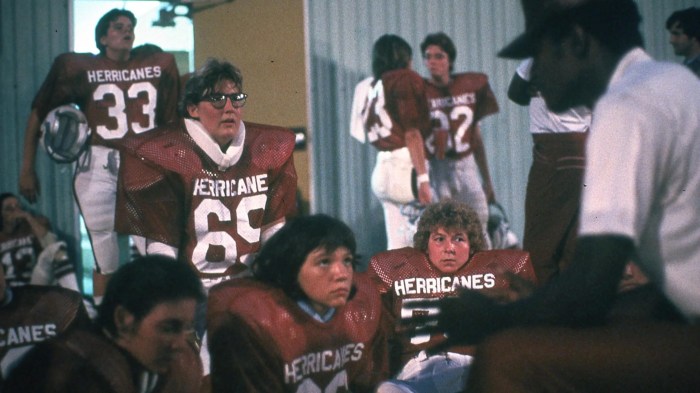
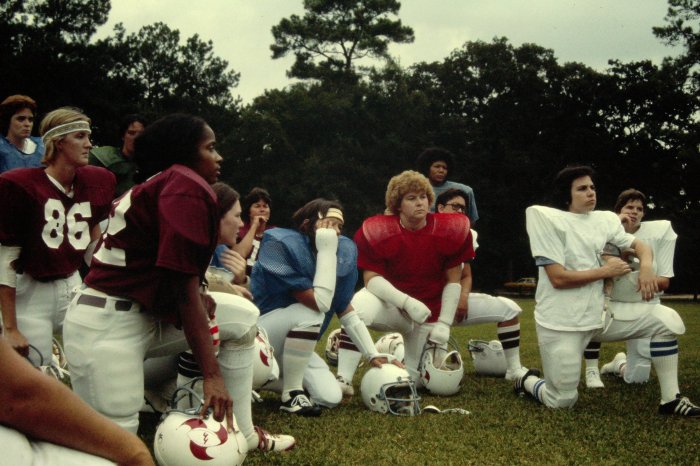
Olivia Kuan’s The Herricanes is a brilliant documentary on the first Houston full tackle women’s football league.

Courtesy of FunMeter

8/10

There’s nothing that’s more loved in the state of Texas than American football. You see some of the stadiums that these high schools and would think that they are playing in the NFL. I mean American football is huge, it’s almost a religion that Texans follow to their coffin. I have committed one of the deadliest acts in this state and choose not to root for any of the Texas teams in the NFL (though I hope the Houston Texans always have a great season because I live in H Town). I’m a New York Giants fan which means I’ve been depressed since our last Super Bowl win in 2012. Yet, I have my team I root for but I don’t really follow the sport religiously like everyone else in this state does. Nonetheless, this documentary caught my eye because it may be about football but this is about the first Houston tackle football women’s team known as the Houston Herricanes. I didn’t know anything about this team but after watching this documentary I found a new love for the resiliency of these ladies. It’s hard to not admire the awe-inspiring spirit of these women on and off the football field.

Before the Houston Energy, the Houston Herricanes were the first tackle football league in the city of Houston, Texas. The documentary does a great job of detailing the beginning of the team’s journey. The film’s director Olivia Kuan uses a lot of archival footage to her advantage by displaying past games and pictures of the team. She is also the daughter of one of the past players of the team. Now, the film isn’t a straight up recounting of the history of this legendary team. The documentary intertwines the fight for Title IX as a way of showcasing just how big of a deal an all tackle football team/league was.

Olivia Kuan’s documentary works well and it helped a lot that I was surrounded by passionate Houston Herricanes’ fans. The film has a way of blending the past with the present that feels so seamless. You never really feel a hindrance on the runtime that makes the pace feel too slow or too fast. Some aspects of the film can feel a bit redundant, but what always brings you back is the team of the Houston Herricanes. Each person who was involved in the team shines brightly with their own charm. Throughout the film, their tenacity and dedication not just to the team but each other is shown through their words. I loved the reunion scene, you could tell that each and every one of them was so happy to see each other. You may not know it at the time, but at that reunion it solidifies that these ladies were part of something larger than themselves.

Even though the Houston Herricanes didn’t last long enough their legacy is felt in the world of sports. Olivia Kuan’s film is a highlight of sports documentaries and aims the spotlight at this very important part of not just the world of sports but the fight for gender equality. Make sure to watch The Herricanes when it eventually makes its way out to a cinema or screen near you.

HCAF23: ‘Family Portrait’ Review

Lucy Kerr’s Family Portrait is a meditative and imaginative look at the cracks within the foundation of a family gathering to take a family picture.

Courtesy of Conjuring Productions

9/10

I’ve had a lot of films that have resonated deeply with me this year. Films like Killers of the Flower Moon shook me to my core, Oppenheimer’s grand display of the troubles inside our protagonist’s head surprised me, but none of them as much as the feeling I got from Lucy Kerr’s Family Portrait. I walked out of this film with a sense of familiarity with the story of the picture. I could not shake off the feeling that I was shown something too intimate that I did not have the right to view. It almost felt like spying on the home of a family as it starts to crumble apart and you don’t have any choice but to keep looking. Movies like this are hard to come by and when they do it’s a delight to be able to witness their magic before it reaches the whole world. This was one of the last films I watched at the festival, and after having a conversation with the director I knew that this would be one of my favorite films of the year.

Family Portrait is directed by Lucy Kerr and written by Kerr and Karlis Bergs. The film stars Deragh Campbell (Possessor) who plays Katy whose boyfriend Olek played by Chris Galust (Give Me Liberty) is supposed to take a family picture at their lake house. That’s a pretty simple premise, right? Well, as the family is trying to get this picture situated the family’s matriarch goes missing. While everyone seems to be off in their own world, Katy sets off on a surrealistic journey to find her mother. The film was shot by Lidia Nikonova and edited by Karlis Bergs. I also have to shout out the sound team composed of Nikolay Antonov and Andrew Siedenburgh.

I could talk for ages about the beautiful cinematography of Family Portrait, its invasive sound design that shakes you to the depths of your skin, and the pensive body language from our lead Deragh Campbell. Yet, none of that comes close to the feeling of watching this movie progress and fly by its almost 80-minute runtime. The film’s meditative pace reminded me of the patience found within Andrei Tarkovsky’s Stalker (a film that changed my life after watching it and the director echoed this same statement) but with the technical language of Ingmar Bergman. Lucy Kerr took a lot of inspiration from Argentinian director Lucrecia Martel’s La Cienaga along with Hungarian director Bella Tarr’s Sátántangó. Kerr loves her long takes and continuously shifts the viewer’s focus as opposed to the camera’s focus on the multiple members of the family. Some aren’t as concerned as Katy and that begins to stress her out. I sat there just dumbfounded that no one cared enough to search for their mother/aunt/wife with Katy. Yet, is that not the point of this film?


I wonder if Lucy Kerr’s answer to her thematic question is that we must venture outside of what we know to fix what’s broken inside? Are we only spectators to the dysfunctional nature of our family especially as the pandemic raged on and a lot of us were forced to stay home pondering these very questions. This is one of those occasions where I think it’s fine that the film doesn’t answer everything. Lucy Kerr wants the audience to continue to feel her narrative and the conversation surrounding this surrealist dreamscape. Make it a mission to watch Family Portrait whenever it’s playing at a cinema near you.