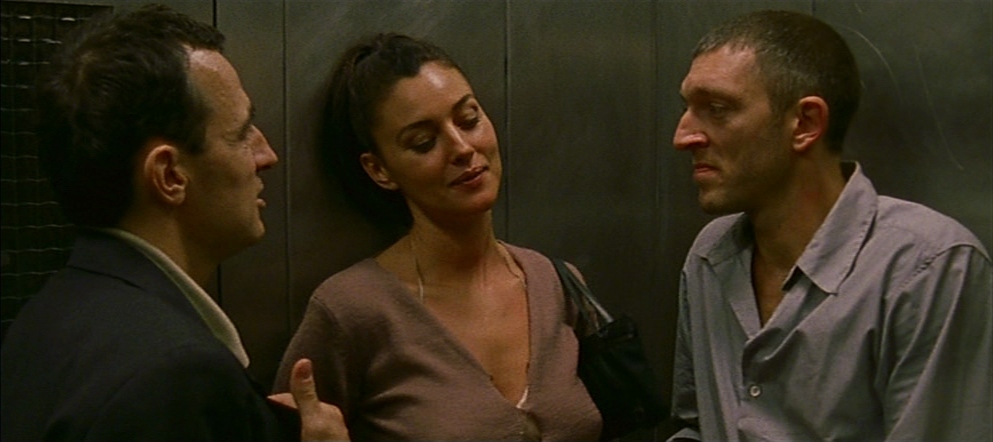
Gaspar Noé Retrospective: ‘Love’

Gaspar Noé’s erotic drama is one of visual mastery and captivating storytelling.

CREDIT: Les Cinémas de la Zone

Love is not just the first film I watched by Gaspar Noé but it is my favorite film of his. I would even go as far as to say that it is one of my favorite films of all time. I still remember my first time watching the film like it was yesterday. I was scrolling through Netflix and tried to find unconventional films about romance. I did not want a run-of-the-mill romantic comedy but instead a film that shows the ups and downs of love. During this time, I was also trying to watch as many films to inspire my approach to filmmaking. I researched a bit about the film and made the decision that I could not watch this film on my 42-inch tv with the audio blasting in my apartment. I sat down in front of my monitor, put on my headphones, and watched this film through my PS4. When I finished watching the film, I knew that I watched something truly special.

Love is Gaspar Noé’s fourth feature film that he originally intended to make after his feature film debut, I Stand Alone. The idea was originally pitched to Vincent Cassel and Monica Belluccia who were originally interested in making the film. Upon further reading of the script and the graphic amounts of sex needed for the film, they passed on it. Gaspar Noé was still eager to work with them thus Irreversible was born. Love is written and directed by Noé. The film premiered out of competition at the Cannes Film Festival in 3D.

In Love, we follow the tumultuous life of Murphy (Karl Glussman), an American film student studying in France who falls in love with a French art student named, Electra (Aomi Muyock). The couple’s romance turns hyper-sexual and both indulge in various drugs, which to be fair is not a surprise to find in a Gaspar Noé film. While exploring each other’s desires, Murphy asks Electra about her wildest sexual fantasy. Electra explains she has always wanted to have a three-way with another woman preferably a blonde skinny woman. Fast forward and the couple meets their neighbor, Omi (Klara Kristin), a young French woman who doesn’t have many connections to her family. After taking her out to eat, the two come back to Murphy’s apartment to smoke some weed and the three engage in Electra’s deepest sexual fantasy. That does not prove to be enough for Murphy as he grows an attraction to Omi, so while Electra is away with her mother he has sex with Omi again but this time the condom breaks. Omi who has a strong pro-life stance will not abort her baby. Murphy tells Electra about what happened, and their relationship deteriorates before his eyes driving Electra to go missing. Murphy worried sick about Electra who has suicidal tendencies begins to reminisce on their relationship and everything he will miss out on now that she is gone.

Love is handled with so much attention through the stylistic approach of Gaspar Noé. Every aspect of filmmaking works together to craft a realistic look of love and lust. Glussman and Muyock have an organic form of chemistry to themselves that attracts me every time they are on screen. Noé incorporates such atmospheric musical choices to create the atmosphere for a film buzzing with raw emotion. Every time I finish this film I find myself wanting to put it right back on.

I usually don’t pay much attention to internet chatter about Gaspar Noé’s films as some “hot takes” seem to miss the point entirely about what he is trying to say with his films. It is impossible to ignore the obvious complaint about this film. I mean it was the number one question throughout most of the press run for this film. Is Gaspar Noé’s Love pornography? No, pornography has one simple goal in mind. As Noé has stated before, in pornography the actresses don’t get pregnant or don’t subscribe to unconventional beauty standards but most importantly Love displays more beyond sex. Sex is a valuable aspect of the film and just as important as the emotions on display. Yes, there are moments that I can agree that Gaspar Noé included pretty much for the shock value, especially in 3D. Other than that, the sex between Murphy and Electra never feels unnecessary within the constraints of our narrative. Through their carnal love, we understand the extent of their relationship. It begins as lust, continues as infatuation, and ends in a painful heartbreak.

Something else can be found within Love that is present within the rest of Gaspar Noé’s filmography, his treatment of his male characters. Even though Electra is nowhere near being the perfect person especially after cheating on Murphy with her ex. Murphy is the one who is most examined in this film. He carries a feeling of ownership over his partner that calls back to Marcus in Irreversible. Murphy feels proud after breaking a glass over Electra’s ex’s head because he feels that he stood up for her. All he did was show everyone the level of his toxicity and embarrass her in the process. In a scene deemed controversial, the two invite a trans sex worker to have a three-way, but Murphy is visibly disgusted by the worker. This says more of the character rather than Gaspar Noé himself as some people believe the filmmaker has some homophobic tendencies in his films. Murphy is once again showcasing his ignorance, he tells Electra in the video store not to judge those involved in pornographic films because they are expressing their love freely. Yet, Murphy cannot hold that same opinion for the sex worker? He does not need to have sex with her but he invalidates her way of expressing love through her identity by showcasing his disgust toward her. Murphy is self-centered and in layman’s terms an asshole. He never once takes into consideration how Electra feels. If he was the perfect partner he believes he is at first, Murphy would have communicated way beforehand his attraction towards other women. Electra points out that Murphy could have a lot of freedom as long as he communicates what he wants. Murphy is another example of the flawed nature of the male characters found in Gaspar Noé’s films.

If you are interested in hearing a more in-depth thematic conversation about Love, please feel free to check out the episode I did with Alexandra Almeida on the film for my podcast, The Cinema Condition.

‘The Unbearable Weight of Massive Talent’ Review

The Unbearable Weight of Massive Talent is a massively entertaining film featuring a fantastic performance by Nicolas Cage.

CREDIT: Lionsgate

7/10

For the past decade, legendary actor Nicolas Cage has been involved in some of his most captivating pieces of work. In 2018, Nicolas Cage gave us what I believe to be his best performance yet in Mandy. Three years later he gives us another one of his best performances that should have been nominated for an Academy Award in Pig. Overall, Nicolas Cage has been stacking up his best work and has been finding his way back into the zeitgeist. Seeing as the film also includes both Tiffany Haddish and Pedro Pascal, I was excited to watch the film. Now, how did the Nick Cage film where Nicolas Cage plays himself hold up?

In The Unbearable Weight of Massive Talent, Nick Cage himself is caught at a crossroads as he tries to find the next best role for himself or retire. After failing to get a role he so desperately wanted he agrees to do a birthday gig his agent played Neil Patrick Harris lined up for him. Things are not easy at home either, as his relationship with his ex-wife Olivia (Sharon Horgan) is deteriorating along with his relationship with his daughter Addy (Lily Sheen). Nicolas Cage is being pressured by the ghost of himself to remain the movie star he is and forget about branching outside of what he is used to. Cage travels to an island to do this birthday gig for a billionaire Nick Cage superfan, Javi Gutierrez (Pedro Pascal), but soon Cage realizes things are not as they seem. Soon after, Cage finds himself helping CIA agents played by Tiffany Haddish and Ike Barinholtz to capture Guttierrez who is believed to have kidnapped a politician’s daughter named Maria (Katrin Vankova).

The Unbearable Weight of Massive Talent excels in being everything it needs to be, a fun action-comedy. Tom Gormican directs an entertaining film from a script written by him and Kevin Etten. The film is not your masterclass of filmmaking but makes it up with some stellar chemistry between the cast especially the dynamic between Pedro Pascal and Nicolas Cage. The film is wholeheartedly a massively entertaining time at the movies, no pun intended. You feel that Nicolas Cage gives his all hopefully proving everyone wrong that even in movies where he plays himself he is still giving one hundred percent. Some characters don’t feel as fleshed out and overall the rushed third act is a bit convoluted. I still find myself intrigued and pulled right back into the film. If anything this picture is here to remind us that Nicolas Cage is back even though he never left.

Watch The Unbearable Weight of Massive Talent in theaters.

‘The Northman’ Review

Robert Eggers’ third feature is an imbalanced Viking revenge film that cannot stand on its own two feet.

CREDIT: Focus Features

7/10

To say we have been expecting the third feature from one of the most interesting filmmakers working right now is an understatement. Robert Eggers has been crafting quite the filmography with his last two feature films, The Witch and The Lighthouse. There has not been a filmmaker like Eggers that has burst into the world of filmmaking in quite a while. When the trailer for The Northman was released, the film immediately shot up to my second most anticipated film of this year. You could say that I was looking forward to this film, and being able to watch this on the big screen was a necessity for me. Well, let’s journey into the brutal landscape of Robert Eggers’ The Northman.

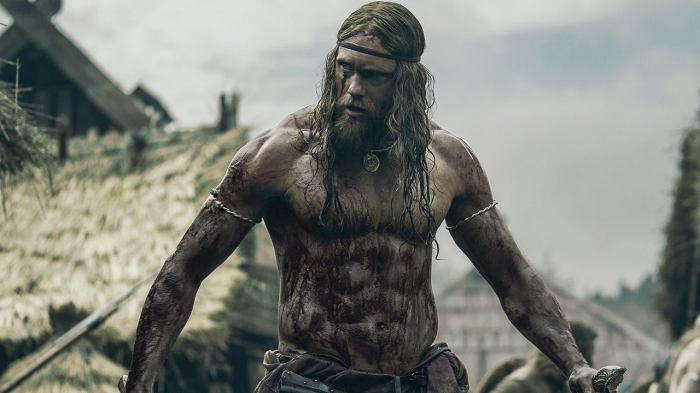
The Northman is directed by visionary artist, Robert Eggers. The film’s script is written by Eggers and Sjón (Lamb). The film stars Alexander Skarsgård, Nicole Kidman, Claes Bang, Ethan Hawke, Anya Taylor-Joy, Gustav Lindh, Elliott Rose, Willem Dafoe, and Björk. The film’s visual language is crafted by frequent collaborator, Jarin Blaschke. The Northman’s musical score is composed by Robin Carolan and Sebastian Gainsborough.

In The Northman, we follow the revenge-filled journey of Prince Amelth (Alexander Skarsgård). Son of King Aurvandil War-Raven (Ethan Hawke) and Queen Gudrún (Nicole Kidman), the family rule over their kingdom on the Island of Hrafnsey. One day, after returning from battle, King Aurvandil War-Raven realizes that he must prepare his son to eventually take the throne as he feels his days are numbered. The two participate in a ritual fueled by hallucinogenics and rage overseen by the king’s jester, Heimir (Willem Dafoe). In the morning, Fjölnir (Claes Bang), led by his small army of soldiers kills the king, and Amleth is forced to retreat. Amleth escapes his father’s kingdom leaving behind his mother and becomes a berserker raiding Slavic villages. He finds love with a sorceress named Olga (Anya Taylor-Joy) while planning his return to reclaim his kingdom, avenge his father, save his mother, and kill his murderer uncle.

The Northman is a conflicting cinematic achievement in the filmography of Robert Eggars. The film is equal parts captivating and convoluted, to say the least. As always, I want to first concentrate on the positives of this film because it has a lot of them and they rightfully should be highlighted when discussing the picture. Jarin Blaschke’s cinematography is a spectacle for the ages. The framing, lighting, and movements fluidly work together to create a visually appealing aesthetic for this film. Carolan and Gainsborough’s work on the musical score is magnificent and encapsulates the aura that is carried through this film. Both of these aspects work so well to create the immersive atmosphere within The Northman. I even found myself really enthralled by Alexander Skarsgård, Nicole Kidman, Claes Bang, and Anya Taylor-Joy’s performances. However, where the picture excels there is also parts where the film falls ultimately flat. The first half of the film plays off way too fast that it does not allow moments to breathe. Once we reach the climax and start the second half, the film begins to drag its weight to wrap up. Characters like Willem Dafoe’s Heimir and Björk’s Seerees get left by the wayside and never come back up again. The script and editing are ultimately the driving factors holding this film from being great. Where Eggers’ last two films captivate the audience through their rich storytelling The Northman sadly cannot find the use of its potential in its epic story.

Watch The Northman in theaters.

Gaspar Noé Retrospective: ‘Enter The Void’

Enter The Void is the psychedelic melodrama that creates a once-in-a-lifetime cinematic experience.

CREDIT: Les Cinémas de la Zone

I don’t indulge in any mind-altering substances other than maybe to an extent my antidepressants, but those are prescribed and I take them only once a day. Throughout my life, I have always wondered what it would feel like to watch films in an altered mental state. It is for own my well-being that I don’t indulge in any of these substances though. Now, there are two films that, in my opinion, make me feel as if I am in another plane of existence. The first one happens to be Stanley Kubrick’s 2001: A Space Odyssey specifically when we enter into the bending of space and time. The other film is Gaspar Noé’s third feature and passion project, Enter the Void. Both films I believe are one-of-a-kind cinematic experiences that utilize many of our five senses to feel this transformation. While exploring the rest of Gaspar’s films back in 2018, this was the last film of his I watched. I specifically remember finding the DVD copy at my alma mater’s library. I would usually go to the library every other weekend and check out five films (mostly those in The Criterion Collection). At this point, I already had a clear understanding of Gaspar Noé’s style, so I checked out Enter the Void, and since then I would never look at filmmaking the same ever again.

Enter the Void is directed by Gaspar Noé and written by him with the help of his wife, Lucile Hadzilhalilovic. The film is believed to loosely adapt the Tibetan Book of the Dead. The film stars Nathaniel Brown, Paz de la Huerta, Cyril Roy, and Ed Spear. Enter the Void is mostly presented from the first-person point of view perspective. The film’s photography is crafted by the director of photography, Benîot Debie. Thomas Bangalter composes the score for this film again after composing Noé’s Irreversible.

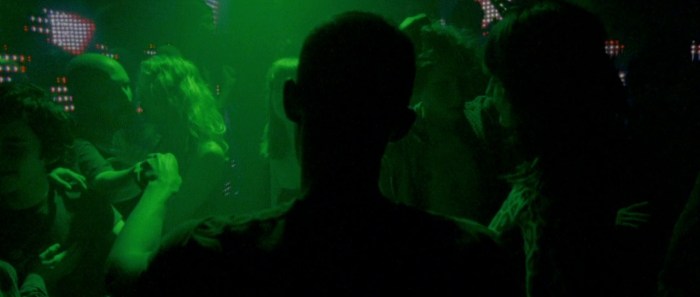
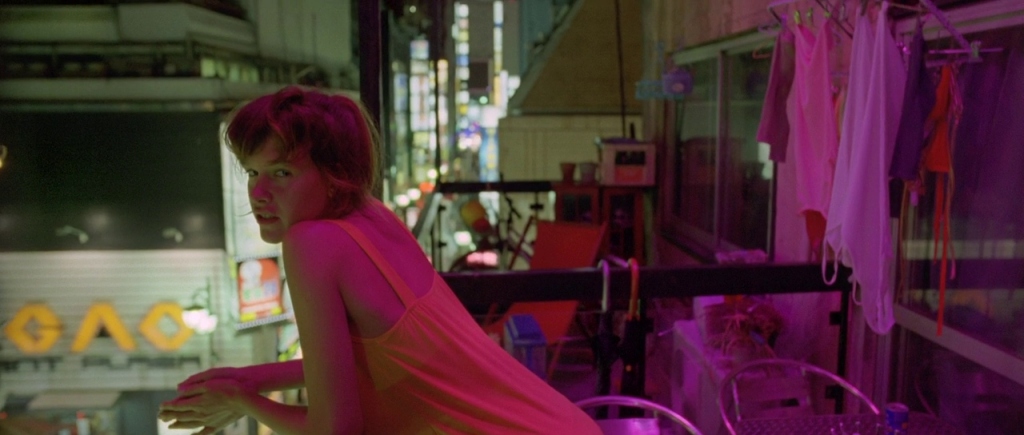
The film follows Oscar (Nathaniel Brown) who is murdered by the police after his friend Victor sets him up at a club in a neon-lit Tokyo called, The Void. After Oscar dies he has an out-of-body experience that allows him to travel through Tokyo and experience the effects of his death on his loved ones’ lives. He watches as his sister Linda (Paz de la Huerta) copes with her loss, his friend Alex (Cyril Roy) leaves his life of drug use/dealing, and Victor (Olly Alexander) burns his bridges. Gaspar Noé has gone as far as to describe this film as a psychedelic melodrama that is concentrated on the experience of the film.

Enter the Void is a hallucinatory experience that explores themes of motherhood, love, existence, and death. It is coated in a mesmerizing visual language filled with neon lights and an interesting approach to camera movements. The performance even though not a big aspect still finds its way to feel raw through the vibrations of Paz de la Huerta’s acting. I love this film because as mentioned it changed the way I looked at filmmaking. Around this time, I was barely starting to understand the world of experimental film. I approached my style of filmmaking with many films in mind and one of them was Enter the Void. Of course, the longer 161 minutes version is better but both versions contain the very experience that Noé intends to display. The first-person point of view and floating camera are never distracting. Once again, we are treated to a film that only Gaspar Noé could make.

Before I continue, I would love to once again bring up a wonderful film essay made by Spikima Movies. Spikima Movies concentrates on the visual presentation of trauma in Enter the Void within their video essay. The trauma expressed is such an important thematic element of the film. The trauma acts as the backbone of our story at hand within Enter the Void. Linda and Oscar haven’t had the easiest life. On top of losing their parents, both have to be separated from each other for most of their teenage and young adult lives. One had to be thrown into the legal foster care system which in itself is not the easiest thing to experience. The siblings’ loss is felt through the film and expressed in various ways. Linda expresses her grief with her constant need for Oscar to be her protector. She needs someone who will not take care of her physically because she is fully capable of that, but she does need someone who will be there to hear her out. She loves her brother because they have an unbreakable bond that has been able to live through their traumatic loss. Oscar is not that different from his sister, even though drugs are most of the time an escape from this reality. I find the symbol of the nipple in this film to be interesting. When a baby is born they cut the umbilical cord which is the literal connection to the mother. The baby is no longer directly connected to its mother and therefore must find another way to stay connected. Well, look no further than breastfeeding and its visual representation of connectivity. A baby consumes milk directly from their mother and for as long as the baby may need it they are physically connected to their mother. There is a scene where you see a younger version of Oscar walking in on his mother as she breastfeeds Linda. Alex even mentions that doing LSD is a lot like sucking on his mother’s nipple. Even when Oscar is having sex with Victor’s mother he proceeds to first suck the nipples. Yes, Gaspar Noé states that the ending is Oscar reliving his birth as a false dream showcasing his most traumatic moment. The camera dips into his mother’s nipple to once again feed and experience the pain of existing without a mother.

Of course, death is another highly important aspect of the film. Noé describes that the film is mostly viewing life after death while on drugs. Death is used as a motif but as the inciting incident, it allows for events to unravel. Linda seems to finally understand that she should be with Alex instead of Mario. Even though death can be a distressing and heartbreaking thing in the world of Enter the Void it leads to some good things. Alex has cleaned himself up and will be able to be there for Linda. One would hope that this leads to a healthy relationship between the two. On the other hand, death leads Victor into an unhealthy path of burning his bridges with his parents and Linda. After being told by Linda that he should kill himself, we never know what happens to Victor since that last confrontation. If death is what finally sets Oscar free of all his problems then the ending is a reminder that reincarnation is more of a punishment for our protagonist. That is where the true experience of Enter the Void is felt.

Gaspar Noé Retrospective: ‘Irreversible’

Gaspar Noé’s second feature is crafted with excellence pushing the boundaries of the filmmaker’s early filmography.

CREDIT: Les Cinémas de la Zone

This article is not going to be easy to write. Irreversible is not an easy film to talk about. On a rewatch, it does not get easier to sit through. This was the second film I had ever watched by Gaspar Noé. I was still attending my second university, so I bought the film through Amazon Prime Video. I watched it late at night because, at this time, I was still having a hard time getting sleep but also knew that this film had a difficult rape scene. I rather not explain to my parents why it was integral to have something like this in the film. At this point, I had only watched Love I did not know what to expect from Gaspar Noé’s second feature film. I mean for the longest time I thought this was his feature debut until I learned about I Stand Alone. One thing was certain after I watched this film there was no doubt in my mind that Noé was of my favorite directors of all time.

Born on the cusps of promising a film told in reverse much like Christopher Nolan’s Memento. Irreversible is written and directed by Gaspar Noé just as most of his work is. The film marks Noé’s first collaboration with his longtime collaborator, director of photography, Benoît Debie. Though Debie did not handle the camera operating, that was all Noé with some help from cocaine as stated in an interview. The film stars Monica Bellucci, Vincent Cassel, Albert Dupontel, and Jo Prestia, who are credited only through their last names. The film also includes a cameo of The Butcher (Phillipe Nahon), who was in Noé’s previous film, I Stand Alone. The film’s score is composed by Thomas Bangalter.

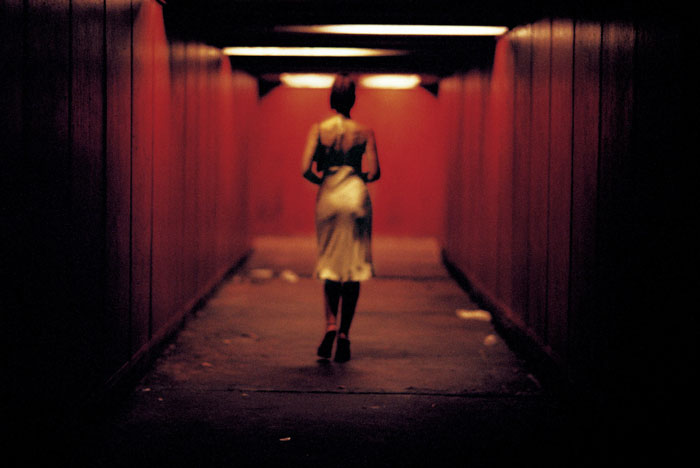
Irreversible is composed of 14 scenes that are presented in reverse chronological order. In the film, we follow Marcus (Vincent Cassel) and Pierre (Albert Dupontel), who are looking for the assailant who brutally raped and left Alex (Monica Bellucci) in a comatose state. The film starts with them finding who they believe to be the assailant and ends with Alex sunbathing and reading a book. The story told in reverse chronological order is paired with rotating camera movements and a low-frequency noise meant to cause nausea and anxiety. The film is most known for containing a long rape scene that Monica Bellucci was solely in charge of directing. Remember when I said this would not be easy to write? In 2019, Gaspar Noé premiered a newly restored version of the film with a ‘straight cut” version of the picture aligning the events in chronological order. I own this version but cannot watch it as it is a Region B blu ray, but when I eventually get the chance to watch it, I will update you all with thoughts.

It is hard to call this a masterpiece, but that is what this film is. This is a film that only artists like those involved in the film could create. I cannot picture this film having any other director at that time or portrayed by any other actors at the time either. There is so much that I can say that is important about the film, but I will reiterate what I have always said about the film, “nothing can be left out of this film, and everything needs to stay the way it is.” I don’t love this film because it gives me a sense of enjoyment. I love this film because it shows what cinema should be. Cinema should break barriers, challenge all conventions, and dare to be something different. That is what Irreversible is to me, and you all could say that means I appreciate the film but do not love it. I love this film. Every time I finish it, I may not want to rewatch it, but I want to discuss it with someone.

“Time destroys everything” is the first phrase you hear and the last you’ll see on the screen. Before I continue any further, I want to bring up two well-done analyses of this film, the first being my friend Taylor Baker of Drink in the Movies’ Letterboxd review and the second being a film essay from the YouTube channel, Spikima Movies. At first, it may be difficult but pay attention to the floating camera. It moves counterclockwise like the narrative structure of the film. It also rotates like those police sirens represented in the film. Taylor puts it perfectly in his review that every one of us knows what happens before we get to the rape, but the rotating camera gives us the actual scope of the crime. We are being told that something truly sinister and primitive has happened before we get to the event. Those actions are one of the most important things to analyze here. It is easy to say La Tenia is the only one acting primitively since he is the person who commits such an inhumane and grotesque crime as assaulting Alex. Marcus and Pierre are behaving just as primitively before and after the traumatic events of the film. Marcus taps into his inner animal, ready to behead anyone in his way that does not help him find who hurt the woman he loves. Pierre is hell-bent on helping but also fighting his animalistic feelings of lust. Before the two ever went to the party, Pierre kept discussing his sexual history with Alex in front of everyone as if he is flaunting the fact he made her orgasm. It brings up an honest question about whether Marcus and Pierre love Alex. While in bed after having sex with Alex, Marcus discusses that he may not want to see Pierre because he stole “his wife” from him, to which Alex replies that basically, she is no one’s property. Who of these two sees Alex for who she is, Marcus or Pierre? Is Marcus tearing the streets apart because he loves Alex, or does he feel his ownership over Alex was stripped away when she was assaulted?

Time is not allowing us to move forward here, but it specifically allows us to be put into the shoes of the victim. Gaspar Noé reminds us that Alex was not just a woman. Alex is a future mother, an ex-lover, and a reader, but most importantly, she is someone with agency. Time destroys everything, of course, but it is also what allows trauma to live forever. We don’t know if Alex will wake up from her current comatose state, but we do know that, if she does, trauma will live with her for an extended period. Time destroys so much of Alex’s future. Time and that trauma destroy her agency.

Gaspar Noé raises the question, who sees Alex as a human being worthy of respect and agency? That would be us, the audience, who are watching this film that views Alex as who she truly is. It is not the police, mobsters, La Tenia, Marcus, or Pierre but us who see her for who she is. Time will destroy everything, but it will also reveal everyone’s true colors.