Gaspar Noé Retrospective: ‘Irreversible’

Gaspar Noé’s second feature is crafted with excellence pushing the boundaries of the filmmaker’s early filmography.
CREDIT: Les Cinémas de la Zone

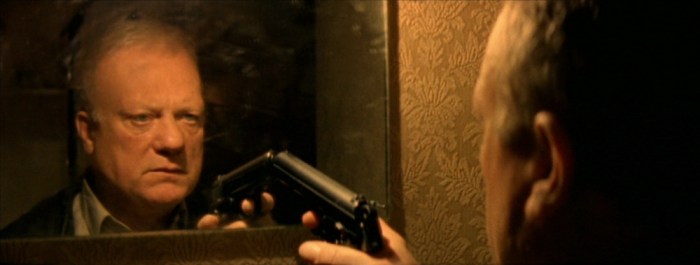
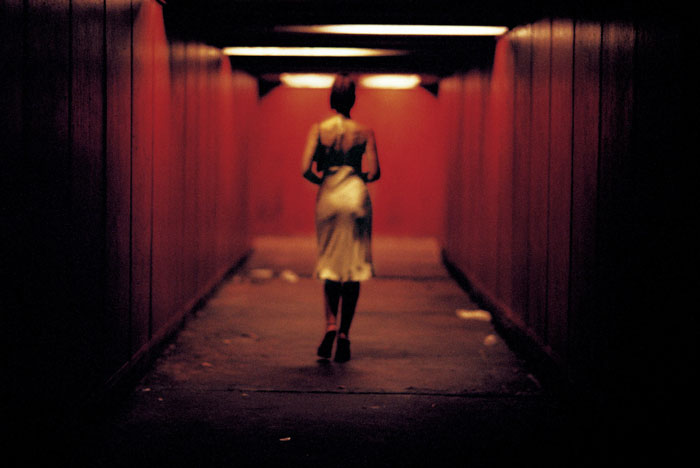
This article is not going to be easy to write. Irreversible is not an easy film to talk about. On a rewatch, it does not get easier to sit through. This was the second film I had ever watched by Gaspar Noé. I was still attending my second university, so I bought the film through Amazon Prime Video. I watched it late at night because, at this time, I was still having a hard time getting sleep but also knew that this film had a difficult rape scene. I rather not explain to my parents why it was integral to have something like this in the film. At this point, I had only watched Love I did not know what to expect from Gaspar Noé’s second feature film. I mean for the longest time I thought this was his feature debut until I learned about I Stand Alone. One thing was certain after I watched this film there was no doubt in my mind that Noé was of my favorite directors of all time.

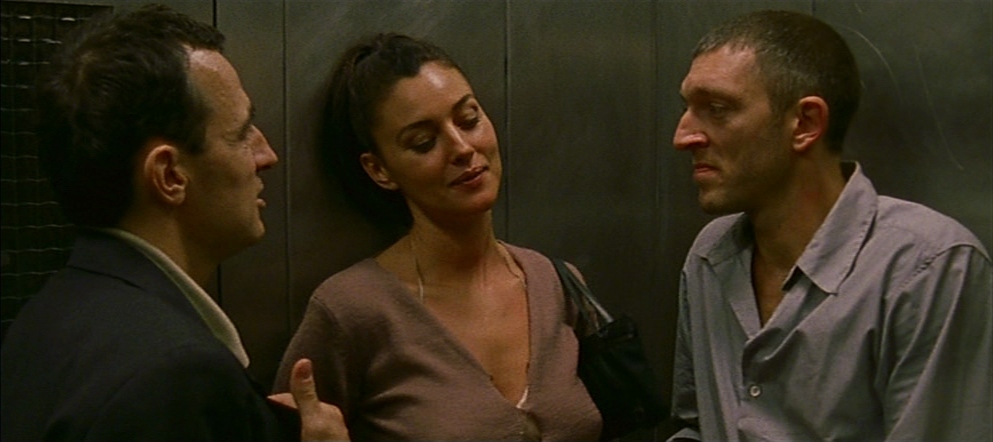
Born on the cusps of promising a film told in reverse much like Christopher Nolan’s Memento. Irreversible is written and directed by Gaspar Noé just as most of his work is. The film marks Noé’s first collaboration with his longtime collaborator, director of photography, Benoît Debie. Though Debie did not handle the camera operating, that was all Noé with some help from cocaine as stated in an interview. The film stars Monica Bellucci, Vincent Cassel, Albert Dupontel, and Jo Prestia, who are credited only through their last names. The film also includes a cameo of The Butcher (Phillipe Nahon), who was in Noé’s previous film, I Stand Alone. The film’s score is composed by Thomas Bangalter.

Irreversible is composed of 14 scenes that are presented in reverse chronological order. In the film, we follow Marcus (Vincent Cassel) and Pierre (Albert Dupontel), who are looking for the assailant who brutally raped and left Alex (Monica Bellucci) in a comatose state. The film starts with them finding who they believe to be the assailant and ends with Alex sunbathing and reading a book. The story told in reverse chronological order is paired with rotating camera movements and a low-frequency noise meant to cause nausea and anxiety. The film is most known for containing a long rape scene that Monica Bellucci was solely in charge of directing. Remember when I said this would not be easy to write? In 2019, Gaspar Noé premiered a newly restored version of the film with a ‘straight cut” version of the picture aligning the events in chronological order. I own this version but cannot watch it as it is a Region B blu ray, but when I eventually get the chance to watch it, I will update you all with thoughts.

It is hard to call this a masterpiece, but that is what this film is. This is a film that only artists like those involved in the film could create. I cannot picture this film having any other director at that time or portrayed by any other actors at the time either. There is so much that I can say that is important about the film, but I will reiterate what I have always said about the film, “nothing can be left out of this film, and everything needs to stay the way it is.” I don’t love this film because it gives me a sense of enjoyment. I love this film because it shows what cinema should be. Cinema should break barriers, challenge all conventions, and dare to be something different. That is what Irreversible is to me, and you all could say that means I appreciate the film but do not love it. I love this film. Every time I finish it, I may not want to rewatch it, but I want to discuss it with someone.

“Time destroys everything” is the first phrase you hear and the last you’ll see on the screen. Before I continue any further, I want to bring up two well-done analyses of this film, the first being my friend Taylor Baker of Drink in the Movies’ Letterboxd review and the second being a film essay from the YouTube channel, Spikima Movies. At first, it may be difficult but pay attention to the floating camera. It moves counterclockwise like the narrative structure of the film. It also rotates like those police sirens represented in the film. Taylor puts it perfectly in his review that every one of us knows what happens before we get to the rape, but the rotating camera gives us the actual scope of the crime. We are being told that something truly sinister and primitive has happened before we get to the event. Those actions are one of the most important things to analyze here. It is easy to say La Tenia is the only one acting primitively since he is the person who commits such an inhumane and grotesque crime as assaulting Alex. Marcus and Pierre are behaving just as primitively before and after the traumatic events of the film. Marcus taps into his inner animal, ready to behead anyone in his way that does not help him find who hurt the woman he loves. Pierre is hell-bent on helping but also fighting his animalistic feelings of lust. Before the two ever went to the party, Pierre kept discussing his sexual history with Alex in front of everyone as if he is flaunting the fact he made her orgasm. It brings up an honest question about whether Marcus and Pierre love Alex. While in bed after having sex with Alex, Marcus discusses that he may not want to see Pierre because he stole “his wife” from him, to which Alex replies that basically, she is no one’s property. Who of these two sees Alex for who she is, Marcus or Pierre? Is Marcus tearing the streets apart because he loves Alex, or does he feel his ownership over Alex was stripped away when she was assaulted?

Time is not allowing us to move forward here, but it specifically allows us to be put into the shoes of the victim. Gaspar Noé reminds us that Alex was not just a woman. Alex is a future mother, an ex-lover, and a reader, but most importantly, she is someone with agency. Time destroys everything, of course, but it is also what allows trauma to live forever. We don’t know if Alex will wake up from her current comatose state, but we do know that, if she does, trauma will live with her for an extended period. Time destroys so much of Alex’s future. Time and that trauma destroy her agency.

Gaspar Noé raises the question, who sees Alex as a human being worthy of respect and agency? That would be us, the audience, who are watching this film that views Alex as who she truly is. It is not the police, mobsters, La Tenia, Marcus, or Pierre but us who see her for who she is. Time will destroy everything, but it will also reveal everyone’s true colors.
‘Fantastic Beasts: The Secrets of Dumbledore’ Review

The third installment in the Fantastic Beasts franchise crumbles under its own incoherent weight.

CREDIT: Warner Bros.

3.75/10

I was pretty much done with the Wizarding World for better or worse after the Harry Potter franchise closed its story. I had heard of these Fantastic Beasts films but I had little to no interest in wanting to watch these films. It is no secret that I am not the biggest fan of the Wizarding World. I think the franchise is one of the most overrated properties that were adapted by some fine pieces of young adult fiction novels. I have viewed these subsequent films as cash grabs trying to milk nostalgia out of a community that has turned its back on a hateful author. Alas, I still wanted to give this film a try, so I caught up on the last two entries and went to the cinema to watch The Secrets of Dumbledore.

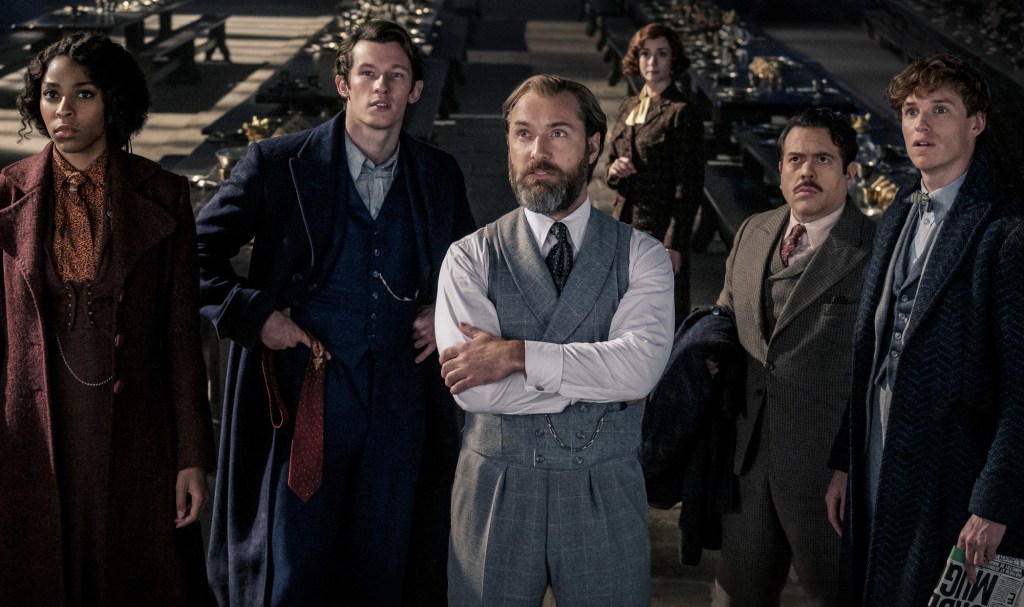
Fantastic Beasts: The Secrets of Dumbledore is directed by David Yates (who has been directing these Wizarding World films since Order of the Phoenix). The film is written by J.K. Rowling and this time enlisting Steve Kloves to help co-write the screenplay. The cast includes Jude Law, Mads Mikkelsen (replacing Johnny Depp from the last two installments), Eddie Redmayne, Katherine Waterston, Ezra Miller, Callum Turner, Dan Fogler, Jessica Williams, and William Nadylam. James Newton Howard returns to provide the original score composition from the last two Fantastic Beasts films. The Secrets of Dumbledore is the third installment in a five-planned film franchise.

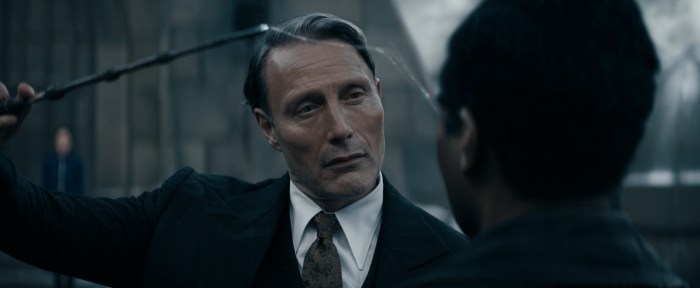
This time around after the events of The Crimes of Grindelwald, Albus Dumbledore (Jude Law) is trying to stop Grindelwald (Mads Mikkelson) so he brings together his team led by New Scamander (Eddie Redmayne). Also, in case you forgot from the last film Credence Barebone (Ezra Miller) joined Grindelwald who is manipulating him to use his powers against Dumbledore. The team of wizards and Jacob the muggle try their hardest to keep a powerful Grindelwald from stealing an election to become the Minister of Magic. All of this is happening while Albus Dumbeldore fights against the past romantic partnership he had with Grindelwald. Will our wizard and one muggle heroes save the day or will an ultra extremist wizard rise to power and lead a full-fledged civil war against non-wizards?

Fantastic Beasts: The Secrets of Dumbledore is a slight improvement from its predecessors in the franchise but is an incoherent screenplay that tries its hardest to stick together. The film drags its weight along the way leaving behind any room for an interesting screenplay. An uninteresting plot relying on the nostalgia of the Harry Potter franchise tries its best to mesh a competent film out of the mess of David Yates’ direction. Mads Mikkelson even though a great addition does well with what he is given. Yet the performance does not feel up to the bar left by Johnny Depp, but it leaves room for a lot of improvement if the next two films are made. Mikkelson and Dumbledore have better chemistry but it is still not enough to save the film. A washed-out uninteresting visual language paired with an amazing score by James Newton Howard at least provides something to enjoy from an almost 2 hours and 30-minute film. Even though Steve Kloves brings a helpful hand, The Secrets of Dumbeldore’s screenplay cannot help fall apart its incoherent backbone. Maybe they get it right in the next one, but the magic is not present anymore in these Wizarding World films.

Watch The Secrets of Dumbledore in theaters and soon on HBO Max after a 45-day theatrical window.

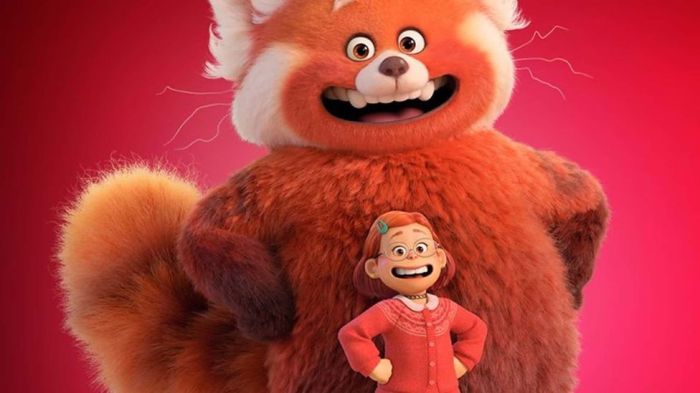
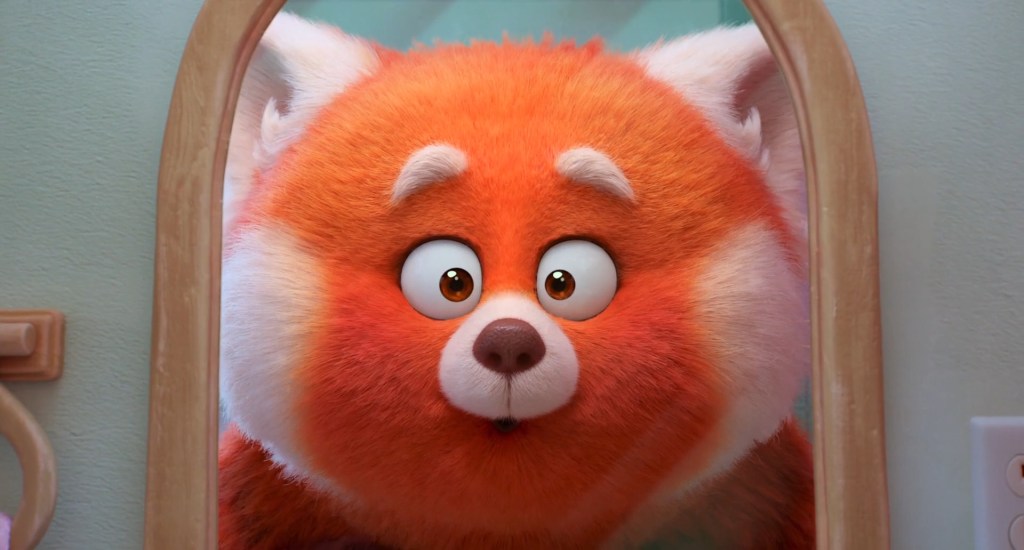
‘Turning Red’ Review

Turning Red is a charming and important film that exemplifies creating a fantastic entry in the Pixar catalog.

CREDIT: Disney

8.25/10

Pixar has always been the more interesting side of Disney’s megacorporate catalog of entities. Even when they were not a Disney property they consistently put out great film after great film. Coco one of their films post-Disney buyout is one of my favorite films of all time. It is safe to say that Pixar has a clear and present impact on multiple generations. They are truly one of the pioneers of the animation medium of filmmaking. For a lot of us, Pixar holds a massive chunk of our childhood and they continue to do that for the coming generations. Without further ado, let us journey into the life of an Asian American teenage girl who turns into a big red panda every time she gets too excited.

Turning Red is directed by Domee Shi who worked on the Pixar short film, Bao. This marks her feature film debut while also having contributed to the animation departments for films like Incredibles 2 and Toy Story 4. The film’s story was created by Domee Shi, Julia Cho, and Sarah Streicher while translated into a screenplay by Cho and Shi. The film’s voice cast includes Rosalie Chiang, Sandra Oh, Ava Morse, Hyein Park, Maitreyi Ramakrishnan, and Orion Lee.

The film set somewhere during the late 90s looks at the life of a confident teenager, Meilin Lee (Rosalie Chiang) or known to everyone around her as Mei. Mei is an average teenage girl she likes boy bands specifically the dreamboats, 4Town, she is desperately trying to see live in concert with her friends. Her friends Miriam Mendelsohn (Ava Morse), Priya Mangal (Maitreyi Ramakrishnan), and Abby Park (Hyein Park) are all on the cusp of making the big jump to being full-on teenagers. The big bear in the room is that, unlike her friends, if Mei gets too excited she suddenly turns into a huge red panda bear. At first, Mei does not know what to make of it but as our journey through the film continues we realize a deep cultural and familial story behind the panda exists. A clash between family dynamics, cultural divide, generational trauma, and puberty commences as it paves the way into a beautiful story about growing.

Turning Red is yet another fantastic effort from Pixar but also one of the best feature debuts of all time. The film is directed with precision and heart that keeps the audience locked in until the credits roll. A beautiful and necessary story about the cultural importance of family creates the atmosphere for a splendid film for all ages. The animation is superb bringing a unique look to the oversaturated world of computer-based animation. The film feels accurate to its era calling back to the fashion of the 90s and music composed fantastically by Ludwing Göransson along with the soundtrack provided by Jordan Fisher. The world of Tamagotchis and boy bands could not feel more suitable to tell such a personal story. Turning Red is an achievement in personal filmmaking that left me in tears over its message. I hope we all understand it is not about keeping things sealed by finding a healthy balance within us.

Watch Turning Red on Disney+.

Gaspar Noé Retrospective: ‘I Stand Alone’

Gaspar Noé’s I Stand Alone is a venture into the nihilistic view of a man beyond repair.

CREDIT: Les Cinémas de la Zone

This retrospective series will contain discussions about sexual assault and extreme forms of violence. Reader’s discretion is advised. This is the only warning for this series. Proceed with caution.

I have lots of filmmakers that come to mind that have contributed to my love of cinema, for example, my favorite director of all time is Alejandro González Iñárritu who made my favorite film of all time, Biutiful. I could also bring up Andrei Tarkovsky who directed Stalker which changed my life forever after watching it for the first time. Then there is Gaspar Noé who I truly believe to be the greatest modern director working right now. I have loved his films ever since I discovered Irreversible when I was in college. This has been a series I have been trying to get off the ground for a while now. At first, I wanted to make film essays about his movies but none of those ever get the chance to live on my YouTube channel because of copyright claim issues. On my podcast The Cinema Condition, we have discussed some of his films like Climax and Love. Essentially, I have decided to sit down and finally type these words out to kick off this series. In this series, we will be looking at all his feature films hopefully leading up to the worldwide release of his newest film, Vortex. I really can’t put into words how much his work means to me but here goes nothing.

This film has always been a blindspot in the filmography of the grand French auteur. I Stand Alone is written and directed by Gaspar Noé. The film is a sequel to his short film, Carne, which also includes a lot of the same cast. The film stars the late Philippe Nahon, Blandine Lenoir, and Frankie Pain. This is Noé’s feature film debut after working on only three shorts beforehand.

In the film, we follow the journey of a man that we know simply as, The Butcher (Philippe Nahon). In the first fifteen minutes of the film, we are reminded of the events of Carne along with a refresher on the life of The Butcher. Once we are done catching up, The Butcher is living with his pregnant girlfriend/mistress and her mother. The Butcher is supposed to be opening a shop but his girlfriend backs out due to feeling hesitant. This leaves The Butcher unemployed and on bad terms with his partner. The Butcher finds work but after being accused of cheating on his girlfriend he physically assaults her to the point of possibly killing their unborn child and steals a gun as he abandons them to return to Paris. Our journey with The Butcher continues as he faces rejection after rejection trying to find a job. Along with rejection, he is met with pitty and humiliation by those he used to do business with or consider his friends. All while fighting incestuous thoughts about his daughter who is still at the institution after the events of Carne. The Butcher sets to fight against the laws of the environment that has created him and continues to feed his pessimistic view of life.

I Stand Alone is a solid foundation for the French provocateur to start his career off. Throughout the film, there are parts that Noé will improve upon in his coming work. The use of title cards, interjecting of black screens for a split second, and lighting will be further improved in his later films. Every filmmaker has to start somewhere and even though aspects like his musical choices are not as great as those featured in, Enter The Void, one can still find a way to appreciate what Noé is working with. The film does not work as much as its predecessor but still brings its themes of nihilism to the forefront. Rightfully, even after the credits roll you will continue to think about what Noé is trying to say with I Stand Alone. The film meanders and tries to hammer things we already know about The Butcher from the first act, but it is Noé’s uncompromising style that truly sets the tone of what we will endure through the picture. While this is not his best work it is still a precursor to what Gaspar Noé will dissect about the human condition for years to come.

It is undeniable that this is Gaspar Noé’s homage to Martin Scorsese’s Taxi Driver while still trying to make something different. The Butcher and Travis Bickle could not be any more different characters. Yes, they both share a distaste for their city that stems from a misogynistic, homophobic, and racist view of modern society. Nevertheless, The Butcher is still shown to be human after all, and even though it does not excuse his behavior and thoughts it does leave room to analyze why he is so beyond repair. The growing socio-economic imbalance leaves the working class people like The Butcher to fend for themselves, while those who write the laws get to profit off of the backs of the lower class. It is no surprise that life would feel so pointless in circumstances like these. Maybe, that is what leads us to be so interested in characters like Travis Bickle or The Butcher? They are reflections of the underbelly of what we choose to ignore day by day. We know people like them exist but when do we ever get to talk about the environments that create people like them?

The Butcher is very much an anti-natalist but yet he loves his daughter and truly believes he should be able to express his inappropriate and predatory sense of attraction towards her. The Butcher knows that he should not feel this way towards his flesh and blood but fights his thoughts day in and day out. In a way, Noé does not seem to be making an excuse for incest but is analyzing this along with us while the film is rolling. Noé in a way is speaking through the grotesque nature of I Stand Alone on why even though characters like The Butcher are interesting to analyze they are not to be idolized. They are flawed humans beyond repair. Gaspar Noé raises the question throughout, that if we subscribe to the idea of morality, when will we as humans truly understand the importance of our very existence? Yet those who write the laws based on morality are they any more above us or all we all simply people trying to find a way to comprehend the complex nature of the human condition? There lies the true nature of the overarching theme of Gaspar Noé’s filmography.

‘The Hand of God’ Review

The Hand of God is Paolo Sorrentino’s most personal film yet that fires on all cylinders.

CREDIT: Netflix

9/10

Paolo Sorrentino has returned with his most intimate film to date. It is his most intimate because The Hand of God is brought straight from Sorrentino’s life. I will always cherish Sorrentino’s work especially because it is tied to some of my fondest memories in undergrad. I watched The Great Beauty in my Italian Cinema class taught by someone I consider to be a great mentor. When word came out that last year Sorrentino would release a new film I was more than excited. Paolo Sorrentino is that type of director who instantly sells me on their films when news breaks out about them.

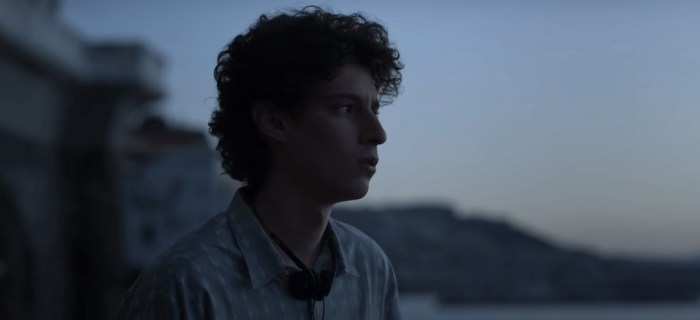
The Hand of God is written, produced, and directed by Italian director, Paolo Sorrentino (The Great Beauty). The film stars Filippo Scotti, Toni Servillo, Teresa Saponangelo, Marlon Joubert, Luisa Ranieri, Renato Carpienteri, Massimiliano Gallo, and Betty Pedrazi. It is the winner of the Grand Jury Prize at the 78th Venice International Film Festival. The Hand of God was nominated for Best International Feature Film at this year’s Academy Awards. The film is a coming-of-age story that looks at the life of Fabietto (Filippo Scotti) as he maneuvers a sudden tragedy in his life. The story is inspired by Sorrentino’s youth and the sudden tragic passing of his parents at a young age while living in Naples.

The Hand of God is yet another masterful achievement from Paolo Sorrentino. It is filled with tender heartbreak that reaches into the deepest corners of the heart. Sorrentino’s style is different but for all the good reasons as he tackles his most personal story yet. There are some performances that don’t stick as much as they should but it is Filippo Scotti who steals the show. Scotti’s body language is felt throughout the whole film and truly allows for one to feel every ounce of emotion the film needs to bring. The film is exquisitely shot bringing to the forefront a very naturalistic style that still feels familiar to Sorrentino’s past films. I found myself really engaged with the film especially in the story even as it drags here and there. The message of the film is so clearly presented that one can’t even fault Sorrentino for wanting to take his time to flesh it out. Art should always be personal and The Hand of God is as personal as you can get within the filmography of one of the greatest directors right now.

Watch The Hand of God on Netflix.