Reviews

Sympathy for the Devil

an opinion on josh trank’s “capone”

This piece comes a little late, but so does everything for 2020 apparently. It has been a long time since I’ve come to sit in front of my keyboard and take up the mantle of “Cinema Reviewer,” but I felt the need to come to the defense of Josh Trank and his latest endeavor, “CAPONE” also known as “FONZO”. It seems other reviewers have not put 2015’s “Fantastic Four” behind them and still hold somewhat of a grudge when Trank’s name is brought up.

When movie audiences hear the name Al Capone, what they envision in their mind is the ruthless gangster; a criminal mastermind who ran the Chicago underworld in the 1920’s and 30’s. Maybe even Robert De Niro’s portrayal in “The Untouchables” where he wears a tuxedo and beats people to death with a baseball bat. Josh Trank’s “CAPONE” is no “The Untouchables”. It’s what happens after the glitz and glamour; where the violence and drama become silent; where old gangsters go to retire, to get old, and to fade away.

I think for many a person, they did not go in expecting what they saw in this movie. They went expecting an action movie where Capone puts his enemies down with a Thompson Submachine Gun and makes those who owe him debts eat through a straw. Those who already knew the story of Al Capone’s last years, I believe, had better expectations on what they were about to see on the screen. For those unaware, Al Capone’s last years were basically spent in what could be called medical retirement. Released from prison (his charges being that of tax evasion) early, at the age of 48, due to the complications of the late stages of syphilis which he apparently had since the age of 15. These complications included that of neurosyphilis which affects the nervous system, coordination, and can cause dementia.

So, instead of a tough talking villain, we have been shown the face of a man who is literally dying in front of us. Well, not just any man, but that of the legendary outlaw/criminal Al Capone who has been made a larger than life figure in our history and media thanks to multiple movies, books, and television shows (including that one where Geraldo Rivera’s career was destroyed and he can now only get a gig on Fox News of all places, but I will let you all research that one on your own time).

With this in mind, it is very easy to see just what Josh Trank and Tom Hardy (I can’t believe it took me this long to mention Tom Hardy in this) have accomplished. They took one of the most legendary historical figures and shone a light onto his last years and just how much of an ordinary human he was and how death is always the great equalizer. If “The Untouchables” was showcasing the climax of Capone’s legend, then “CAPONE” is it’s lowest depths, where he crawls slowly to that awaiting grave. Trank does not falter and does not shy away from showing the fragility of Capone, putting Tom Hardy in frame to drool over himself, smoke a carrot like Bugs Bunny, scream as his possessions are being sold off, and even shitting his silk drawers.

I personally think “CAPONE” is a marvelous insight into the final years of one of the most legendary and vile humans to walk the face of this earth. Al Capone doesn’t deserve our sympathy, but Josh Trank’s brilliance in storytelling and Tom Hardy’s gift of acting helps to rip it from us. ~ YoungYoda
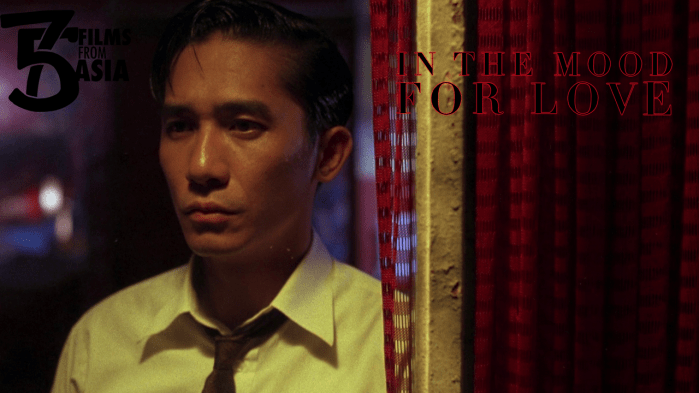
75 Films From Asia: IN THE MOOD FOR LOVE (2000)

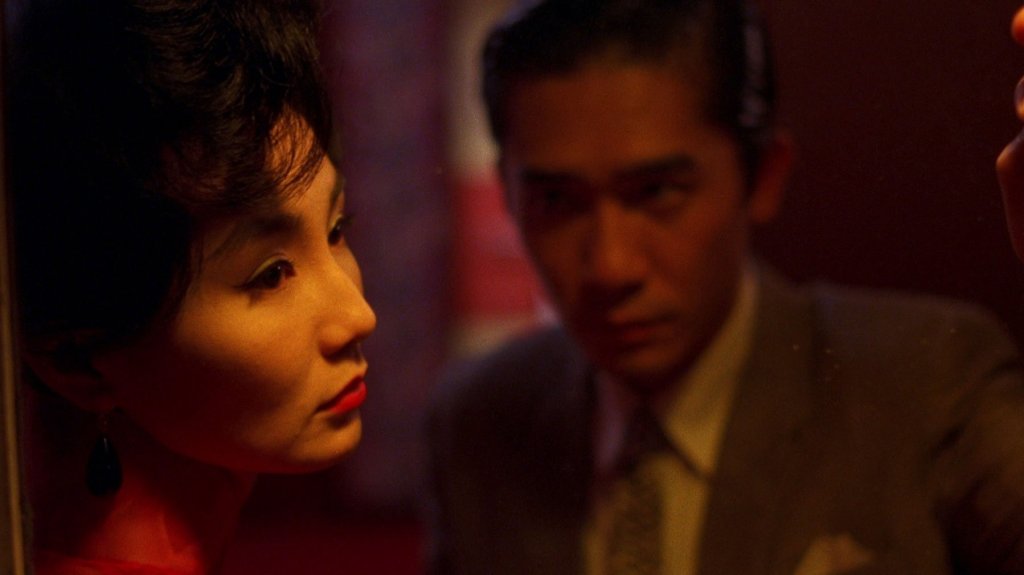
Wong Kar-wai crafts an incredibly intimate film that depicts accurately what loneliness and heartbreak feels like.

CREDIT: Block 2 Pictures

We have reached Hong Kong, and when I began drafting the films for this challenge I was excited to watch some work from a specific director from Hong Kong. I was told this director was incredibly important in not just Hong Kong Cinema but cinema in general. I knew I had to watch something from the legendary Wong Kar-wai soon. Now, I will not lie and say this was my first film from Kar-wai, because I watched Chungking Express (1994) for a class project beforehand. Even though I had watched one piece from his work before absolutely nothing could have prepared me for the glorious film that is In The Mood For Love (2000).

Filled with rich stylized sets and profound dialogue, In The Mood For Love (2000) is a carefully sensual forbidden love story that refuses to let go until the credits roll. The story follows two people who develop feelings for each other after they discover that their spouses are having a love affair. What comes after in this masterpiece is beautiful, saddening, but so exquisite to consume. Loneliness and heartbreak are depicted carefully inside of a world that cannot allow these two to properly fall in love with each other. Wong Kar-wai is a director who approaches his work with such tender care but is still able to bring in his style to the forefront. Every single minute of this movie was eye-opening and I never wanted to stop watching it. I am so excited to watch more of his work throughout this challenge and fall in love with it as I fell in love with this picture.

As always feel free to follow along with the challenge on my Letterboxd list for mini-reviews, this column for more in-depth reviews, or find the rest of the films that I am going to watch on this google doc.

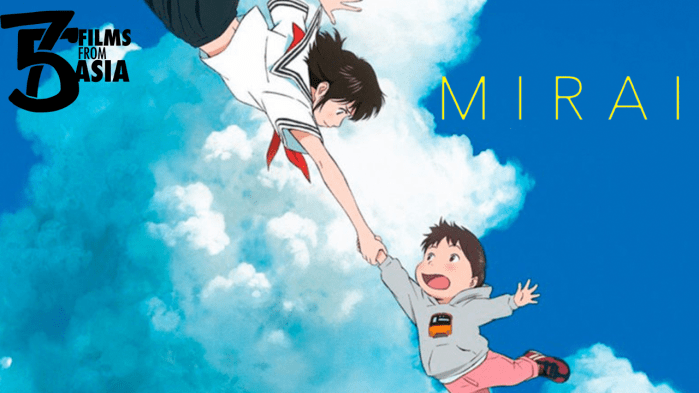
75 Films From Asia: MIRAI (2018)

Miirai (2018) is Mamoru Hosoda’s masterpiece as it encompasses incredible storytelling with beautiful animation and themes of childhood, innocence, and parenthood.

CREDIT: Studio Chizu

Continuing on with my 75 Films From Asia challenge I have once again stopped at the country of Japan to watch and review Mamoru Hosoda’s Academy Award-nominated masterpiece film, Mirai (2018). The film follows a child navigating the arrival of his baby sister as he grows jealous of her. He takes a journey through the various important people in his family tree as he tries to understand his unjust feelings toward his sister, Mirai. On the other hand, the film does not only focus on Kun and Mirai’s relationship but also his Father as he tries to be a stay at home dad.

The film is monumentally stylized by Hosoda’s exquisite animation style along with an incredible musical score. The story is well written and finds itself creeping into your heart with every person Kun meets from his family. Also, the father’s journey to further understand how to be a better father and partner is so well represented. Of course, there is humor in the journey but it all is wrapped up in the heart of the film. I truly believe that this is Mamoru Hosoda’s masterpiece and it will be further appreciated in the “future.”

As always you can keep up with my journey through this movie challenge by reading my reviews, but you can also take a look at the list of films by checking out this google doc or following along on my Letterboxd.

75 Films From Asia: SUMMER WARS (2009)

Mamoru Hosoda’s Summer Wars (2009) is a fantastic effort by the incredible Japanese director that is delightful from start to finish.

CREDIT: Madhouse

Welcome to my 75 Films From Asia column where you will find all the reviews for my 2020 movie challenge where I watch 75 movies from the grand continent of Asia! All films have been pre-selected and you can find them on this google doc or follow along on my Letterboxd! I have always been interested in Asian Cinema and now I have the chance to broaden my film horizons by exploring more of this continent’s cinematic history. So from now on to the end of the year, I hope you enjoy reading my journey through these 75 films.

The story is a pretty simple young boy is taken to the girl of his dreams’ great-grandmother’s 90th birthday to act as her boyfriend, but there is a huge twist to all that is going on. Cyber hijackers use a virtual video game to control nukes that could destroy not just the family’s home but the whole city. What seems like such a simple plot is a very well thought out story about family and gender norms.

The film is highly stylized and is as anime as it gets, but it is unique in its sense that it does not look like a Studio Ghibli, Shonen, or a film by Satoshi Kon but it is in the style of Mamoru Hosoda. That along with the voice acting, score, heart, and humor that revolves around the film makes it so special. What I appreciate the most about the picture is its commentary on gender norms on not just women in a family, but those that force men into a single definition of masculinity. Summer Wars (2009) is a magical film to start this challenge with and one that warmed my heart from beginning to end.

‘Cinema Paradiso’: A Timeless 80’s Italian Classic

Giuseppe Tornatorre’s Cinema Paradiso (1988) is a monumental picture that remains timeless 31 years later.

CREDIT: Miramax

Everyone has a certain film that is so close to their heart. For some that maybe It’s A Wonderful Life (1946)E.T. the Extra Terrestrial (1982), or even modern treats like Lady Bird (2017). For me, it is Guiseppe Tornatore’s Academy Award-winning 1988 masterpiece, Cinema Paradiso. From its opening shot to its phenomenal ending the film captivates every emotion that is capable of being felt.

Cinema Paradiso (1988) looks at the life of an old Italian director who must go back to his hometown in Italy and confront his life before he left his home after hearing the news of his father figure passing away. The film is accompanied by exquisite direction and cinematography. It is also followed by its young and older cast members portraying every character on screen. The most captivating part of Cinema Paradiso (1988)? It is none other than Ennio Morricone’s heartbreakingly beautiful score that tugs on the heartstrings. No score is capable of automatically drawing tears from its first note like this beautiful piece of art.

It is so hard for me to fully explain what makes this film so special to me granted most of my work is reviews. This film could easily be written off as an old man reflecting on his childhood is much more than that. There is a sense of dread but admiration for what Alfredo did for Toto. He did not just introduce him to his love of cinema, but he introduced him to the unconditional love from a father figure that he was longing for. Toto must confront the loss of someone he cherished so much, but also realize that because of Alfredo he had someone who pushed him constantly to be the best he could be. So when it comes to that amazing ending and Toto receives the final gift from Alfredo, he is reminded that even though his decisions weren’t perfect they were imperative to take.

Cinema Paradiso (1988) is not just a movie about the love of cinema but the love of our mother, father, first job, friends, and of course our first love. It is a timeless classic that extends from the country of Italy to the rest of the world.